Plants
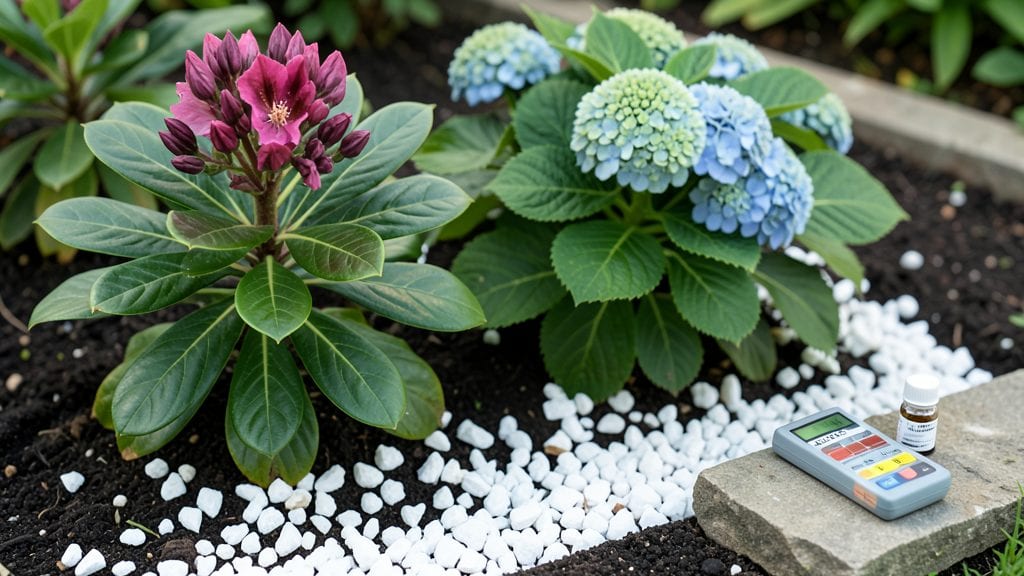
Garden plants that need lime thrive best in alkaline soil (pH 7.0–8.5), including vegetables like broccoli, Brussels sprouts, and cabbage, plus flowering plants such as lilacs and lavender. Acid-loving plants should avoid lime entirely, while neutral soil plants tolerate it in moderation.
Lime—typically crushed limestone—raises soil pH by neutralizing acidity, making essential nutrients like molybdenum and boron more available to plants. 🌱 Without this adjustment, alkaline-loving plants (especially brassicas) struggle to absorb key minerals, leading to stunted growth or yellowing leaves.
I’ve seen firsthand how a simple soil test can reveal whether your garden needs lime—most backyard gardens benefit from a light application in early spring or fall, but timing matters to avoid overcorrecting the pH.
For example, lilacs and hydrangeas (when you want blue blooms) crave alkaline conditions, while blueberries and azaleas will wither if lime is added. The key is testing your soil every 2–3 years, especially in regions with naturally acidic soil like the Pacific Northwest or Southeast.
A pelletized lime spreads more evenly than powder, and a 1-pound application per 100 square feet is a safe starting point for most gardens.
💡 In This Article
- How Lime Adjusts Soil pH for Alkaline-Loving Plants
- Best Plants for Lime-Enriched Soil and Growing Tips
How lime adjusts soil pH for alkaline-loving plants
When you add crushed limestone (calcium carbonate) to acidic soil, it triggers a chemical reaction that neutralizes excess hydrogen ions (H+). These ions are what make soil acidic, and when lime dissolves, it releases calcium (Ca2+) and carbonate (CO3 2-) ions.
The carbonate ions react with water to form bicarbonate (HCO3-), which then combines with H+ ions to create carbonic acid (H2CO3). This compound breaks down into water and carbon dioxide gas, effectively removing H+ ions from the soil solution. 🔥 The result?
A gradual but steady increase in pH, often raising it by 0.5 to 1.0 points per application.
The magic happens in the root zone, where this pH shift unlocks essential nutrients that become unavailable in acidic conditions. Take molybdenum, for example—a micronutrient critical for nitrogen metabolism in plants.
At pH 5.0, only about 0.1% of soil molybdenum is plant-available, but that jumps to 10% or more when pH reaches 7.0. Similarly, boron (needed for cell wall formation) becomes far more accessible in alkaline soil.
Without lime, plants like broccoli or Brussels sprouts can't access these nutrients, leading to symptoms like yellowing leaves or poor flowering.
Here's what most gardeners miss: lime doesn't just raise pH—it improves soil structure by adding calcium, which strengthens cell walls in plants and helps bind soil particles.
The ideal application rate depends on your starting pH, but a general rule is 50 pounds of pelletized lime per 1,000 square feet to raise pH by 1 point in clay soil, or 25 pounds in sandy soil.
Too much lime can create its own problems, like locking out iron or manganese, so testing before and after application is crucial. I've seen gardens where overzealous liming turned once-vibrant tomatoes into iron-deficient plants with yellow leaves between the veins.
Timing matters too. Apply lime in early spring or fall when soil is moist but not waterlogged—this gives it 2-3 months to react before planting season. The reaction slows dramatically in dry conditions, so watering after application helps activate the chemical process.
For container gardens, use 1-2 tablespoons of horticultural lime per gallon of potting mix, mixed thoroughly. The key is patience: complete pH adjustment can take up to a year, especially in heavy clay soils where water movement is restricted.
What's fascinating is how different plants respond to these chemical changes. While brassicas (like cabbage) thrive at pH 6.5-7.5, legumes such as peas and beans prefer slightly higher pH (7.0-8.0) because they need more available calcium for nodule formation.
Even within the same family, varieties can differ—some hydrangeas bloom blue in alkaline soil, while others produce pink flowers under the same conditions. This variability is why soil testing is your best friend when working with lime.
A simple home test kit ($10-$20) can tell you whether you're starting at pH 5.0 (needs 5-10 lbs of lime per 100 sq ft) or pH 6.5 (may only need 1-2 lbs).
The science behind lime's effectiveness lies in its buffering capacity. Once you raise pH to the right level, the soil's natural minerals help maintain that balance. For example, calcium carbonate from lime reacts with soil acids to form insoluble compounds, creating a natural pH buffer.
This is why well-limed soils stay stable for years—unlike synthetic pH adjusters that require constant reapplication. The downside? It takes time to reverse the process if you later need to lower pH for acid-loving plants.
In that case, you'd need to add organic matter (like peat moss) and wait patiently for microbial activity to gradually acidify the soil again.