Fertilization
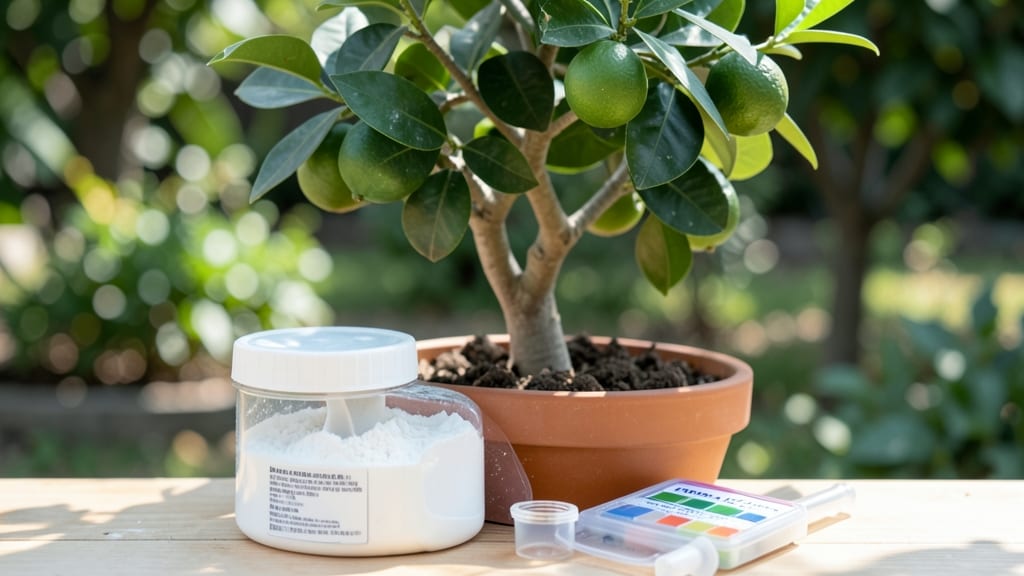
Using calcium carbonate in gardening raises soil pH levels by neutralizing acidity, preventing nutrient lockout—especially for magnesium and phosphorus—and improving root development in acidic soils. Apply 1-2 pounds per 100 square feet, mixing lightly into the top 2-3 inches of soil.
Calcium carbonate—often called agricultural lime—works by binding with hydrogen ions in acidic soil, effectively raising the pH and unlocking essential nutrients. 🌱 Unlike quick-acting amendments, it provides long-term buffering, which is especially valuable for plants like blueberries or azaleas that thrive in slightly acidic conditions.
I’ve found that applying it in early spring before planting gives roots the best chance to establish in balanced soil conditions.
This amendment is particularly useful when your soil test reveals pH levels below 6.0, where many micronutrients become unavailable. For example, phosphorus becomes locked in the soil when pH drops, stunting plant growth despite adequate fertilization.
The key is to apply it evenly and water it in thoroughly to avoid creating localized high-pH spots that could harm sensitive plants.
💡 In This Article
- How Calcium Carbonate Adjusts Soil Chemistry
- Best Practices for Applying Calcium Carbonate to Gardens
How calcium carbonate adjusts soil chemistry
When you add calcium carbonate to acidic soil, it triggers a chemical reaction that directly targets the excess hydrogen ions (H+) causing low pH. The calcium carbonate (CaCO₃) dissociates into calcium (Ca²⁺) and carbonate (CO₃²⁻) ions, while the carbonate ions react with H+ ions to form bicarbonate (HCO₃⁻) and eventually carbonic acid (H₂CO₃), which breaks down into water and carbon dioxide.
This process consumes H+ ions, effectively reducing soil acidity and raising the pH. 🌱 The reaction is gradual but creates a lasting buffer against future acidification.
The buffering effect is what makes calcium carbonate superior to quick-lime (calcium oxide) or hydrated lime (calcium hydroxide) for long-term soil management. While lime products raise pH faster, calcium carbonate releases calcium more slowly, providing a steady supply that prevents sudden pH spikes that can harm plant roots.
For example, blueberries—which prefer pH 4.5-5.5—can actually suffer from over-liming if you use fast-acting amendments, but calcium carbonate allows for precise, gradual adjustments.
This chemical adjustment isn't just about raising pH—it's about unlocking nutrients that become unavailable in acidic conditions. Iron (Fe) and manganese (Mn), essential for chlorophyll production, bind tightly to soil particles when pH drops below 6.0, making them inaccessible to plants.
Calcium carbonate helps release these micronutrients by increasing soil pH, while also providing calcium for cell wall development. The result? Healthier roots that can absorb nutrients more efficiently, even in formerly hostile acidic soils.
One key difference from other amendments is calcium carbonate's neutral effect on soil structure. Unlike gypsum (calcium sulfate), which adds sulfur and can acidify over time, calcium carbonate doesn't introduce new acidic elements. Its purity makes it ideal for organic gardening programs where you want to avoid synthetic inputs.
The granular form also resists clumping, making it easier to distribute evenly across garden beds compared to powdered lime products.
For visual contrast, imagine two soil samples: one with pH 5.0 (highly acidic) and another amended with calcium carbonate to reach pH 6.5.
The treated soil will show improved root hair development (visible under magnification as fine, white filaments) and better aggregation of soil particles, creating a more porous structure that enhances water and oxygen movement. This physical transformation complements the chemical benefits, creating an environment where plants can thrive without nutrient deficiencies.
What most gardeners don't realize is that calcium carbonate's effectiveness depends on proper soil moisture. When dry, the reaction slows dramatically—you'll need to water the soil thoroughly after application to activate the chemical process.
This is why spring application (when soils are naturally moist from winter rains) works best, giving the amendment 4-6 weeks to fully integrate before planting season begins. 💫