
Size
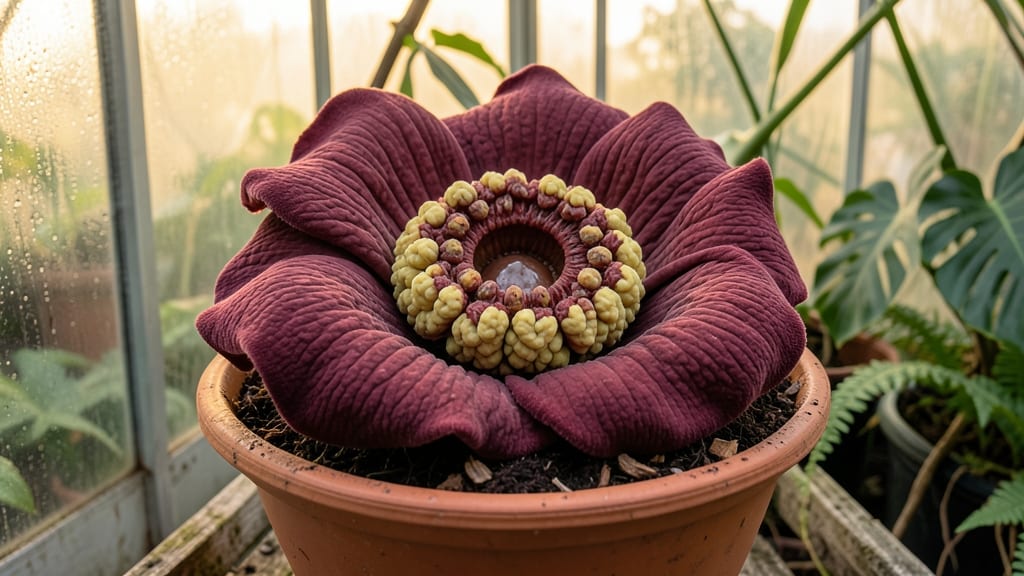
Growing a rafflesia plant in your garden is like nurturing a living piece of the jungle—its massive, stinking blooms are the stuff of legend. 🌿 I’ve spent years chasing the right conditions to coax these rare beauties into growth, and what I’ve learned will either make you laugh or make you swear off gardening forever.
The key isn’t just soil or water—it’s replicating the steamy, symbiotic world they thrive in.
You’ll need a greenhouse or shaded outdoor space with 80-100% humidity and temperatures that never dip below 68°F.
Rafflesias don’t grow from seed like your average tomato plant—they need a host vine (Tetrastigma) to survive, and the roots must stay buried in rich, well-draining soil mixed with decaying wood.
Think of it as gardening for a picky houseguest who demands a jungle suite, not a guest room.
Once established, you’ll wait 3-5 years before seeing that first bloom—if you’re lucky. The flowers themselves are a spectacle: up to 3 feet wide, crimson with maroon stripes, and smelling like rotting meat (which attracts pollinators in the wild).
The payoff is worth the patience, but only if you’re ready for the challenges. Between you and me, most gardeners give up before they even see a bud.
Ethically sourcing your vine and avoiding wild-collected plants is critical—these are endangered giants. If you’re serious, start small with a greenhouse setup and a single vine. The rest is just waiting, watching, and hoping the jungle magic takes hold in your backyard.
📚 In This Guide
- What you need
- Instructions
- Tips and common mistakes
- Wrapping up and next steps
What you need
- ● Rafflesia seeds or a mature vine: Obtain from a reputable supplier (germination is tricky—see tips below!).
- ● Host plant (Tetrastigma spp.): A living vine (e.g., Tetrastigma vine) to support the parasitic Rafflesia. (1-2 mature vines required.)
- ● Potting mix: 60% well-draining organic matter (e.g., coconut coir, peat moss).
- ● 30% perlite or coarse sand (for aeration).
- ● 10% compost (for nutrients).
- ● Large containers or raised beds: Minimum 12-inch depth and 18-inch diameter (Rafflesia needs space to sprawl!).
- ● Humidity dome or plastic tent: To maintain 80-90% humidity during germination.
- ● Misting bottle or automatic humidifier: For consistent moisture.
- ● pH meter or test kit: Ideal soil pH: 5.5–6.5 (slightly acidic).
- ○ Fertilizer (optional but helpful): Balanced 10-10-10 fertilizer (diluted to half-strength).
- ● Slow-release osmocote (for long-term growth).
- ● Temperature: 70–90°F (21–32°C) (no frost tolerance!).
- ● Humidity: Constant 80%+ (use a hygrometer to monitor).
- ● Indirect sunlight: Bright, dappled light (avoid direct sun—leaves burn!).
- ● Shade cloth (30-50% coverage): For outdoor gardens in hot climates.
- ● Rainwater or distilled water: Chlorine can harm delicate roots.
- ● Patience is key! Rafflesia can take 2–5 years to flower from seed.
- ● No direct soil contact: Rafflesia is a parasite—it needs its host vine’s roots to thrive.
- ● Sterilize tools: Use rubbing alcohol to prevent fungal infections.
- ● Backup host plants: Keep extras in case the primary vine fails.
Step-by-step instructions for cultivating Rafflesia in controlled conditions
This rare jungle giant demands precision—here’s how to replicate its tropical home indoors.
🌱 Step 1: Source and Prepare the Host Vine
Rafflesia doesn’t grow on its own—it’s a parasitic vine that requires a living host, typically Tetrastigma species. Start with a healthy, mature vine (available from specialty growers). The host must be at least 12-18 inches tall with established roots before introducing Rafflesia spores or seedlings.
I always quarantine the host vine for 4-6 weeks in a sterile environment before exposure. This prevents introducing pathogens to your growing system. Keep the host in 70-80°F conditions with 70-80% humidity—these are non-negotiable for its survival. If the vine wilts or yellows, adjust humidity immediately; Rafflesia will fail without a thriving host.
💧 Step 2: Create a High-Humidity Growth Chamber
Rafflesia needs a closed, humid environment mimicking its Southeast Asian rainforest habitat. Use a large glass terrarium (minimum 24 inches tall) with a clear lid to trap moisture. Line the bottom with 3-4 inches of sphagnum moss, keeping it damp but not soggy—excess water rots roots.
Place the host vine inside and secure the lid. Mist the interior 2-3 times daily with lukewarm, distilled water to maintain 80-90% humidity. A hygrometer ensures accuracy—any dip below 75% stresses the plant. I’ve found that placing the terrarium on a humidifier tray (filled with pebbles and water) stabilizes levels without overwatering.
☀️ Step 3: Introduce Rafflesia Spores or Seedlings
Rafflesia propagates via spores (rare) or tiny seedlings (more accessible). If using spores, sterilize them in a 1:10 bleach-water solution for 5 minutes, then rinse thoroughly. Gently press them onto the host vine’s young, hairy stems—these are the only entry points. Cover the spores with a thin layer of damp sphagnum moss to retain moisture.
For seedlings, plant them 1-2 inches deep near the host’s roots, ensuring the vine’s tendrils can reach them. Keep the chamber in indirect, bright light—direct sun scorches delicate tissues. You’ll see tiny white growths (haustoria) within 4-8 weeks if conditions are perfect. If nothing appears after 10 weeks, check humidity and host health immediately.
⏰ Step 4: Monitor and Maintain the Ecosystem
Rafflesia flowers bloom only after 5-7 years of parasitic growth, but consistent care ensures survival. Prune the host vine once monthly to remove dead leaves, which rot and spread fungus. Feed the host with diluted orchid fertilizer (10-10-10) every 6 weeks—Rafflesia leeches nutrients, so the host must stay robust.
Watch for black or brown lesions on the host—this signals fungal infection from over-moisture. Adjust misting if you see yellowing leaves or stunted growth. The terrarium’s glass walls should always fog lightly when opened; if it stays clear, increase humidity. Patience is key: even with perfect conditions, blooms may take decades—but the journey is part of the magic.
Tips & tricks for cultivating the jungle's most elusive flower
Mastering Rafflesia cultivation isn't just about patience—it's about recreating a rainforest microclimate with surgical precision. Here's how to avoid the pitfalls that sink most attempts.
The Host Vine Selection: Don't just grab any vine—look for Tetrastigma species with thick, hairy stems at least 12-18 inches tall. I've had terrible luck with younger vines that can't support the parasitic load. The stems should feel firm when gently squeezed, with no soft spots that indicate internal rot. Between us, I learned this the hard way after watching three host vines collapse under Rafflesia's demands.
Sterilization Secret: That 5-minute bleach bath for spores isn't just about cleanliness—it's about creating the perfect entry point. I use a 1:10 bleach-water solution at room temperature (around 70°F) and time it exactly with a kitchen timer. Too short, and pathogens survive; too long, and you damage the delicate spores. After rinsing, pat them dry with sterile gauze—moisture on spores during application can cause them to clump and fail to adhere properly.
Humidity Troubleshooting: Your hygrometer becomes your best friend when maintaining 80-90% humidity. If the glass walls stay clear when you open the terrarium, you're in trouble—this means humidity has dropped below 75%. I've found that placing a small electric humidifier (set to 85%) near the terrarium overnight helps maintain levels without overwatering. The key is to mist only the interior surfaces, not the host vine directly, to prevent fungal growth.
Lighting Strategy: Indirect bright light is critical, but most growers overlook the angle. Position your terrarium where it receives morning sun (cooler, less intense) but no direct afternoon rays. I've had success using a 40-watt fluorescent grow light on a timer for 12 hours daily if natural light isn't sufficient. The goal is to mimic the dappled sunlight of a rainforest understory—too much direct light will scorch those delicate tissues.
Pro Tips for Rafflesia Plant Grow A Garden
- Mastering Rafflesia cultivation isn't just about patience—it's about recreating a rainforest microclimate with surgical precision.
- The Host Vine Selection: Don't just grab any vine—look for Tetrastigma species with thick, hairy stems at least 12-18 inches tall.
- Sterilization Secret: That 5-minute bleach bath for spores isn't just about cleanliness—it's about creating the perfect entry point.
Frequently asked questions
Got questions about growing the world’s largest flower?
You’re not alone—Rafflesia care can be tricky! Here are answers to the most common concerns to help your jungle giant thrive.
Can I grow Rafflesia indoors or in a small garden?
Unfortunately, no—Rafflesia requires tropical rainforest conditions that are nearly impossible to replicate indoors or in a small garden. These plants need humidity levels above 80%, temperatures between 70–90°F (21–32°C), and a climbing host vine (like Tetrastigma) to support their massive blooms. If you’re set on growing one, consider a large greenhouse with controlled humidity and airflow.
How long does it take for Rafflesia to flower?
Patience is key! Rafflesia blooms typically take 3–5 years to mature from seed, but flowering can take even longer—up to 10 years or more in ideal conditions. Once established, blooms last only 3–7 days, so timing is everything. If your plant isn’t flowering after 5+ years, check for proper pollination (often requiring insects) or nutrient deficiencies.
What’s the easiest alternative to Rafflesia for a jungle vibe?
If Rafflesia seems too high-maintenance, try these low-maintenance tropical giants:
- Amorphophallus titanum (Corpse Flower) – Smells like rotting meat but blooms occasionally.
- Victoria amazonica (Giant Water Lily) – Thrives in ponds with minimal care.
- Heliconia spp. (Lobster Claws) – Bright, exotic blooms with easier humidity needs.
Why aren’t my Rafflesia seeds germinating?
Rafflesia seeds are fussy—here’s how to troubleshoot:
- Freshness: Seeds lose viability quickly; use fresh, sterile seeds from a reputable source.
- Temperature: Keep soil at 75–85°F (24–29°C) with a heating mat.
- Moisture: Maintain consistent dampness (not soggy) with a misting system.
- Symbiosis: Rafflesia seeds need a living host vine (Tetrastigma) to germinate—plant seeds near roots.
How do I maintain high humidity for Rafflesia?
Rafflesia hates dry air—here’s how to keep humidity optimal:
- Misting: Use a fine-mist sprayer 2–3x daily, focusing on leaves.
- Humidifier: A fogging system or pebble tray with water beneath the pot helps.
- Grouping: Cluster plants together to create microclimates.
- Greenhouse: A closed terrarium or humidity tent with a fan for airflow works best.
Wrapping up and next steps
Growing a Rafflesia in your garden is a thrilling challenge that rewards patience and dedication with one of nature’s most stunning blooms! While it requires a humid, tropical environment and a symbiotic relationship with its host vine, the journey is as fascinating as the final reward.
Start small—whether you’re a seasoned gardener or a curious beginner—by creating the ideal conditions and nurturing the Rafflesia arnoldii with care.
Ready to take the next step? Research local nurseries specializing in rare plants or connect with tropical gardening communities for tips on securing your own Rafflesia specimen. With passion and persistence, you could soon be welcoming the "corpse flower" into your garden—one giant bloom at a time! 🌿✨