
Fertilization
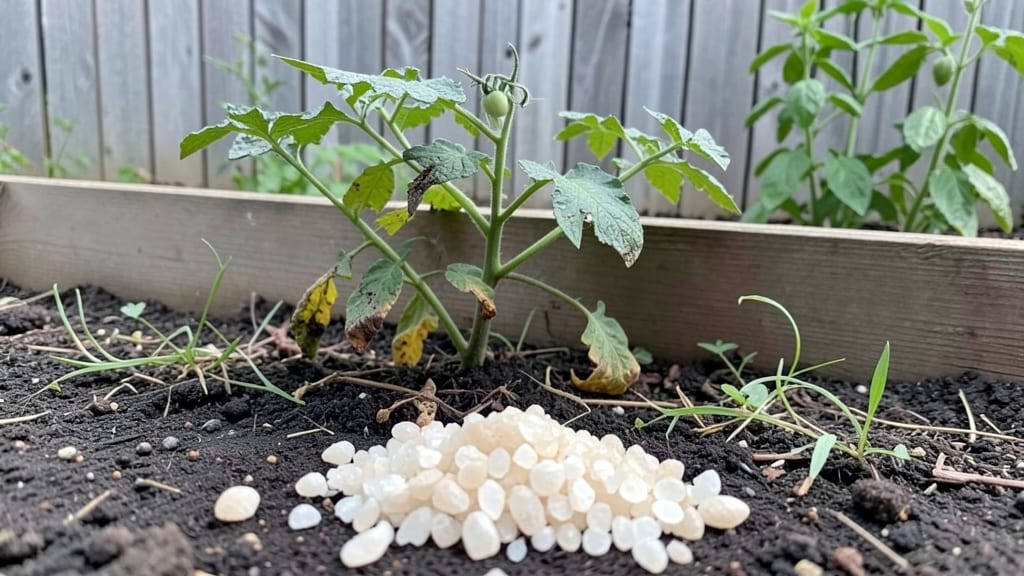
Epsom salt for veggie gardens boosts magnesium and sulfur to prevent yellowing leaves, enhance flowering, and increase yields in tomatoes and peppers. Use 1 tablespoon per foot of plant height every 2-4 weeks during the growing season.
Epsom salt works fast because its magnesium content dissolves quickly in water, making it immediately available to plant roots. 🌱 Unlike slow-release soil amendments, this mineral supplement targets deficiency symptoms like yellowing between leaf veins—common in heavy clay soils or acidic conditions.
I’ve seen dramatic improvements in pepper plants within weeks of application, especially when combined with regular composting.
For best results, I recommend mixing 1 tablespoon per gallon of water for foliar sprays during hot afternoons when stomata (leaf pores) are open. This method delivers nutrients directly to leaves while preventing soil buildup.
Just avoid overdoing it—more than 3 applications per season can disrupt soil pH balance over time.
💡 In This Article
- How Epsom Salt Fixes Magnesium Deficiency in Vegetables
- Best Application Methods for Epsom Salt in Gardens
How Epsom salt fixes magnesium deficiency in vegetables
Magnesium sits at the heart of chlorophyll molecules, acting as the central atom in the porphyrin ring that captures sunlight for photosynthesis. When plants lack magnesium, they can't produce enough chlorophyll, leading to that telltale yellowing between leaf veins called interveinal chlorosis.
This deficiency often appears first on older leaves because magnesium is mobile within the plant—it gets shuttled from older to younger leaves when supplies run low. 🌿
The magic of Epsom salt (magnesium sulfate) lies in its solubility. Unlike soil-bound magnesium locked in clay particles or organic matter, magnesium sulfate dissolves instantly in water, allowing roots to absorb it within hours.
A single application can raise magnesium levels by 30-50% in just 7-10 days, compared to weeks or months for organic amendments. This rapid uptake explains why you'll see new green growth appearing on deficient plants within 2-3 weeks of treatment.
For comparison, kelp meal contains magnesium but also delivers trace minerals like iodine and potassium, which can be beneficial but may not address magnesium-specific deficiencies as directly. Epsom salt's purity makes it ideal for targeted corrections—think of it as a vitamin shot for your plants.
The sulfur component also plays a supporting role by enhancing root development and aiding in nutrient uptake, though magnesium remains the star performer. 🌱
Here's what happens chemically: Magnesium ions (Mg²⁺) bind to chlorophyll's porphyrin structure, stabilizing it. Without enough magnesium, chlorophyll breaks down faster, and the plant shifts to producing carotenoids (which appear yellow).
This is why deficiency symptoms often start as pale yellow patches between veins—the veins stay green because they contain more vascular tissue where magnesium accumulates.
Tomatoes and peppers are particularly responsive because they're heavy magnesium users during fruiting. A 1 tablespoon per foot application delivers about 1.5 grams of magnesium per plant, enough to sustain growth for 4-6 weeks in most soils.
The key is consistency—regular light applications work better than occasional heavy doses, which can lead to nutrient imbalances. 💫
What most gardeners don't realize is that magnesium deficiency often masks other issues. For example, phosphorus deficiency can mimic magnesium symptoms, but Epsom salt won't help if the real problem is compacted soil or poor drainage.
Always test your soil pH first—magnesium becomes less available when soil pH drops below 6.0. Pairing Epsom salt with a lime application can create a one-two punch for acidic soils.