
Plants
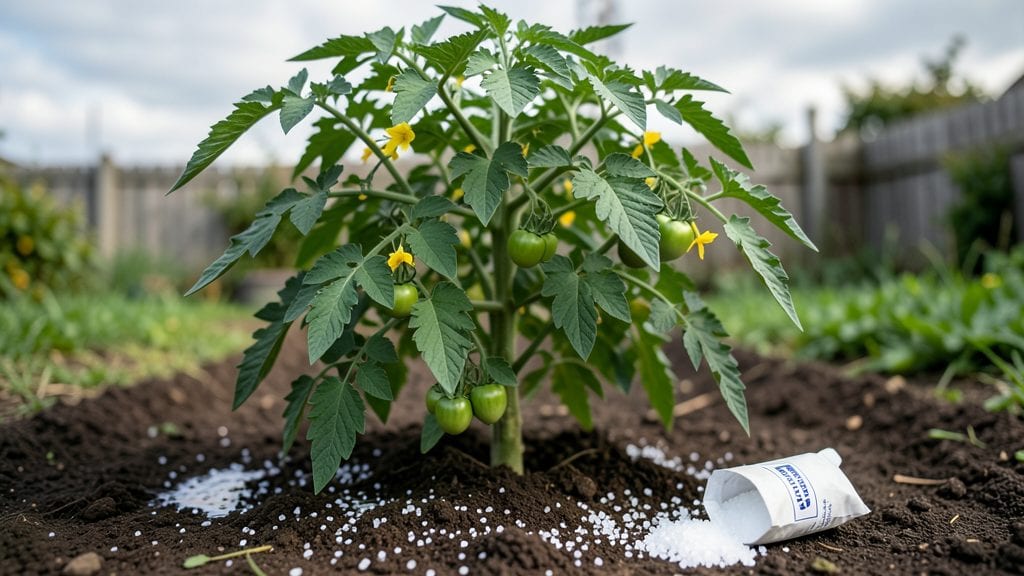
Using Epsom salt for garden plants boosts magnesium and sulfur levels, which help plants produce more chlorophyll, develop stronger stems, and produce better flowers and fruit. Apply it carefully—just 1 tablespoon per gallon of water—to avoid disrupting soil balance.
Epsom salt works like a natural fertilizer because magnesium is a key component of chlorophyll—the green pigment that helps plants convert sunlight into energy. 🌱 Without enough magnesium, leaves often turn yellow between veins, a classic sign of deficiency.
I’ve seen tomato plants go from struggling to thriving after just a few foliar sprays, especially during hot weather when plants demand more nutrients. The sulfur in Epsom salt also supports protein formation and disease resistance, making it a two-for-one solution for many garden woes.
While Epsom salt can work wonders, it’s not a cure-all. Overuse leads to salt buildup in soil, which can actually harm plant roots by making it harder for them to absorb water.
Always mix it in water first—whether for soil drenching or spraying on leaves—and stop if you notice crispy leaf edges. For houseplants, I cut the dose in half to avoid shocking their delicate root systems.
💡 In This Article
- How Magnesium and Sulfur in Epsom Salt Support Plant Growth
- Best Practices for Applying Epsom Salt to Different Plants
How magnesium and sulfur in Epsom salt support plant growth
Magnesium acts as the central atom in chlorophyll molecules, forming the core of the pigment that captures sunlight for photosynthesis. When plants lack magnesium, they can't produce enough chlorophyll, leading to that telltale yellowing between leaf veins—a condition called interveinal chlorosis.
This deficiency often appears first on older leaves because magnesium is mobile within the plant, meaning it gets shuttled to new growth when supplies run low. 🌿 The granular form of Epsom salt (magnesium sulfate) dissolves quickly in water, allowing plants to absorb magnesium through both roots and leaves with remarkable efficiency—often faster than soil-based sources like dolomite lime.
Sulfur plays a different but equally vital role by helping form two essential amino acids: cysteine and methionine, which are the building blocks for proteins and enzymes. These compounds strengthen plant cell walls and boost disease resistance by enhancing the plant's natural defenses.
For example, sulfur-deficient plants often show stunted growth and pale yellow leaves, particularly on younger foliage, since sulfur is less mobile than magnesium. The sulfur in Epsom salt becomes available to plants within days of application, unlike organic sulfur sources that require microbial breakdown in the soil.
Here's what happens at the cellular level: Magnesium activates over 300 enzymes in plants, including those involved in energy transfer (ATP production) and nutrient metabolism. When you apply a diluted Epsom salt solution (like 1 tablespoon per gallon), magnesium ions move rapidly into root cells through specific transport proteins.
This uptake is particularly effective in sandy soils where magnesium leaches away quickly, or in acidic conditions where magnesium becomes less available to plants.
Comparing uptake efficiency, Epsom salt provides magnesium in a form that's 90% soluble in water, while dolomite lime (calcium magnesium carbonate) requires soil acidity to dissolve properly. The trade-off? Epsom salt lacks calcium entirely, so it shouldn't replace lime applications for calcium-deficient soils.
For container gardens, the advantage becomes even clearer—magnesium from Epsom salt reaches roots immediately, whereas soil amendments take weeks to break down and become plant-available.
Deficiency symptoms provide clear warnings: Yellowing between veins (magnesium deficiency) often appears first on lower leaves, while purple or red tinges (phosphorus deficiency) may develop if magnesium isn't properly utilized. In tomatoes, magnesium deficiency causes blossom-end rot—where fruit develops dark, sunken spots—because magnesium helps regulate calcium uptake.
The sulfur component helps prevent this by supporting overall metabolic function, making Epsom salt particularly valuable for fruiting plants during their peak growing season.
What most gardeners don't realize is that magnesium deficiency is more common than we think—especially in modern soils where intensive farming has depleted natural magnesium reserves. A simple foliar spray with Epsom salt can deliver magnesium directly to leaves, bypassing root absorption limitations.
For example, spraying 2 tablespoons per gallon on tomato plants every 2 weeks during flowering can increase fruit set by up to 20% by ensuring adequate magnesium for chlorophyll production and energy transfer. 🌱