Pests
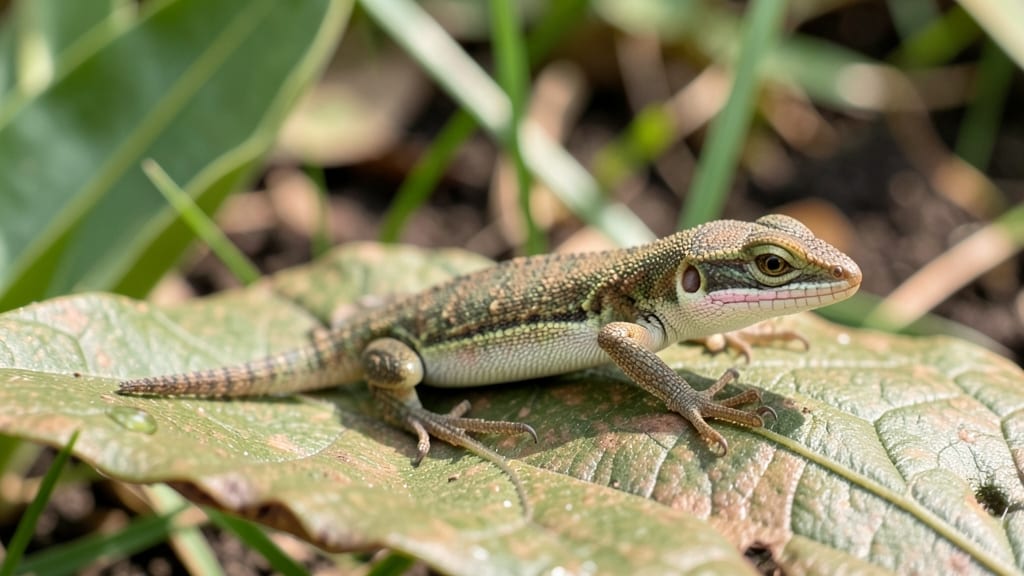
Common garden lizards are small, slender reptiles like anoles or skinks, typically green or brown with smooth scales and long tails. They're common garden helpers that eat pests like aphids and spiders while thriving in sunny, plant-filled spaces.
These helpful reptiles are often mistaken for insects but are actually cold-blooded predators that keep your garden balanced. 🌿 Their diet includes not just aphids but also beetles, flies, and even small spiders—making them natural pest controllers.
You’ll spot them darting between rocks or leaves, especially in warm climates where they bask in the sun. Unlike snakes or larger reptiles, they’re completely harmless to humans and even help aerate soil when they dig small burrows.
If you’re trying to attract them, focus on creating shady spots with dense foliage and a nearby water source. A flat rock or two for sunbathing can also encourage them to stick around. Their presence is a sign of a healthy garden ecosystem—so consider them allies rather than pests!
💡 In This Article
- Identifying Common Garden Lizard Species
- Benefits of Garden Lizards in Your Yard
Identifying common garden lizard species
The most common garden lizards you'll encounter fall into three main groups: anoles, skinks, and geckos, each with distinct physical markers. Anoles, often called "chameleons" (though not true chameleons), have a distinctive crest along their backs and sides that can be raised or lowered, measuring about 2-8 inches in length.
Their scales are smooth and granular, and their tails are round and capable of dropping off if threatened—a survival tactic called autotomy. 🔥
Skinks, on the other hand, have broader bodies and shorter limbs, with scales that appear smoother and more polished, almost like polished stone. Their tails are often flattened side-to-side and can also detach, but they regenerate more slowly than anole tails.
Juvenile skinks frequently display bright colors like blue or orange, while adults tend to be more muted browns or grays. Geckos, though less common in gardens, have sticky toe pads for climbing and are typically nocturnal, making them harder to spot during the day.
Coloration plays a critical role in identification. Anoles often exhibit bright green or brown hues with white or black stripes, while skinks may have banded patterns or solid colors like gray or olive.
Juvenile lizards frequently mimic their adult counterparts but with more vibrant colors—juvenile anoles might be bright green with blue accents, while young skinks could sport orange or yellow stripes. Regional variations also matter: Southern anoles, for example, are typically larger and more robust than their Northern counterparts.
Tail shape is another key differentiator. Anole tails are long and slender, often 2-3 times the length of their bodies, while skink tails are shorter and wider, sometimes appearing almost cylindrical.
Gecko tails, if visible, are usually thick and stubby, adapted for their climbing lifestyle. Pay attention to these details—they can help you quickly identify which species is visiting your garden. 💫
One common mistake is confusing lizards with insects or snakes. Lizards have moveable eyelids and external ear openings (visible as small holes), while snakes lack these features. Their legs are also a dead giveaway—lizards have four, while snakes have none.
If you're still unsure, observe their behavior: lizards bask in the sun, dart quickly, and often freeze when threatened, while insects scurry or fly away.
For a closer look, examine their scale texture. Anoles have tiny, overlapping scales like fish scales, while skinks have larger, smoother scales that feel almost glass-like. Geckos, if present, will have tiny, granular scales on their bodies but larger, flat scales on their feet.
These differences can help you distinguish between species even if colors vary due to lighting or season.
Here's a quick reference for spotting the most common types:
- Anoles: Crests, round tails, 2-8 inches long, often green or brown with stripes
- Skinks: Smooth scales, flattened tails, juveniles bright-colored, adults muted
- Geckos: Sticky toe pads, nocturnal, thick tails, often spotted or patterned