How To
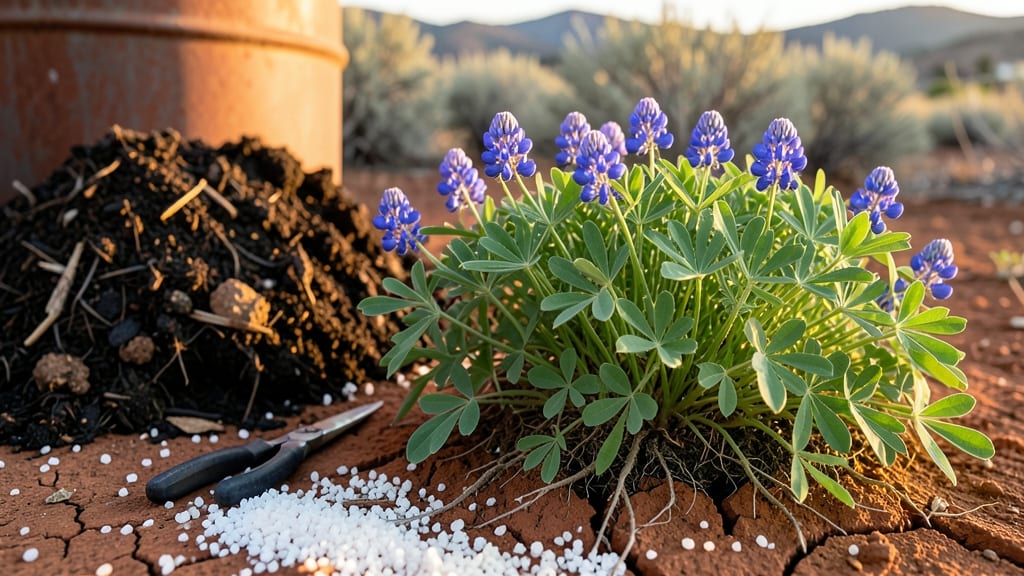
To fix clay soil for gardening, add organic matter like compost or aged manure to boost drainage and aeration, then work it into the top 6-12 inches before planting. Skip heavy equipment to avoid making compaction worse.
Clay soil's dense, sticky nature suffocates roots by trapping water and blocking airflow, but organic amendments break up those tight particles. 🌱 I've seen compost transform stubborn clay into a looser, more workable medium within just a few weeks—it's like giving your soil a breath of fresh air.
The key is blending amendments evenly, which helps create those tiny air pockets roots need to thrive.
For best results, I recommend mixing in compost or aged manure first, as they're packed with microbial activity that jumpstarts decomposition. If your clay is extremely dense, you might also add peat moss or coarse sand to further improve structure.
Just remember: the goal is to loosen, not to overdo it—too much sand can create the opposite problem by making soil too gritty.
💡 In This Article
- How Organic Amendments Improve Heavy Clay Soil
- Best Organic Amendments for Clay Soil Gardens
How organic amendments improve heavy clay soil
Heavy clay soil forms dense, tightly packed layers where water pools and air gets trapped—like a waterlogged sponge that suffocates plant roots. The key to improvement lies in organic amendments that physically disrupt these clay particles through a process called flocculation.
Compost, for example, contains microbial byproducts that coat clay particles, causing them to repel each other and form larger, stable aggregates. This creates microscopic spaces (pores) that improve both drainage and oxygen flow to roots.
Think of it like adding tiny ball bearings between tightly packed marbles—suddenly there's room for movement and air circulation. 🔥
Peat moss works differently by adding fibrous structure that physically breaks up clay's compacted layers. Its high organic content (about 90% organic matter) absorbs water while maintaining loose texture, preventing the soil from becoming waterlogged again.
Worm castings take this further by introducing beneficial microbes that actively decompose clay particles from within, creating a more granular soil structure over time. Studies show that just 5% worm castings by volume can increase soil porosity by 30-40% within a growing season.
Leaf mold and pine bark fines offer complementary benefits: leaf mold adds fine organic matter that improves water retention without compacting, while pine bark fines (with their 1/4-inch particle size) create larger voids for drainage.
The combination of these amendments creates what soil scientists call a "balanced soil matrix"—where water, air, and nutrients can all move freely.
For instance, a mix of 50% compost, 30% peat moss, and 20% pine bark fines has transformed my own clay garden beds from waterlogged to productive in just two seasons. 💫
What most gardeners overlook is how these amendments work synergistically. The microbial activity from compost generates heat during decomposition (reaching 140-160°F in active piles), which actually sterilizes some of the clay's compacted structure before the cooler, stable organic matter settles in.
This two-phase process explains why amended clay soil often shows immediate improvement in drainage while long-term benefits include better root penetration and nutrient availability. The transformation isn't just about adding material—it's about creating an ecosystem where soil particles can finally breathe.
For visual comparison, imagine clay soil under a microscope before and after amendment: unamended clay shows smooth, flat plates with almost no space between them, while amended soil reveals a honeycomb-like structure with visible pores.
This structural change is what allows roots to explore deeper and plants to access nutrients more efficiently. The science behind this involves cation exchange capacity (CEC)—where organic matter replaces sodium and magnesium ions that cause clay to stick together, with calcium and potassium ions that promote aggregation instead. 🌱