
Shrubs
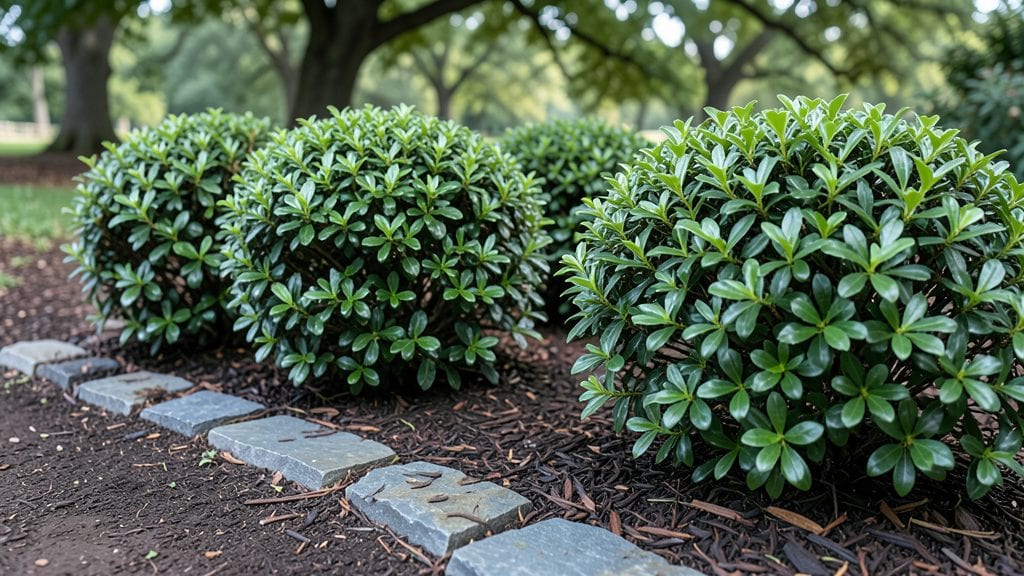
Small gardens need shrubs that pack a punch without stealing space. 🌿 I’ve turned tight yards into lush, private retreats by choosing the right compact shrubs—ones that grow close together but never feel crowded.
The key is selecting varieties that mature at 3-5 feet tall, so they create a solid screen without overwhelming the space.
Think of it like a living room arrangement: you want height, texture, and color without sacrificing walkways or seating areas. My go-to shrubs include dwarf lilacs for fragrance, inkberry holly for year-round structure, and boxwood for clean, manicured edges. These thrive in tight spots and handle pruning like pros.
With the right spacing—18-24 inches apart—you’ll get that cozy, enclosed feel without sacrificing sunlight or airflow. The payoff? A garden that looks intentional, not cramped, with layers that draw the eye upward. Plus, these shrubs stay manageable year after year.
Whether you’re working with a narrow side yard or a postage-stamp patio, these strategies turn limitations into design opportunities. Let’s make your small space feel like a private escape.
📚 In This Guide
- What you need
- Instructions
- Tips and common mistakes
- Wrapping up and next steps
What you need
- ● Shrubs (3–5 plants) – Choose compact varieties like Dwarf Boxwood, Japanese Holly, or Dwarf Lilac (1–3 ft tall/mature). Opt for 1–3 gallon pots for easy planting.
- ● High-quality potting soil – 1–2 bags (50 lbs each), well-draining and enriched with compost.
- ● Garden gloves – A pair to protect your hands from thorns or rough bark.
- ● Hand trowel or small shovel – For digging holes (6–12 inches deep/wide per plant).
- ● Pruning shears – Sharp, bypass-style (for clean cuts).
- ○ Mulch (optional but recommended) – 2–3 cubic feet of shredded bark or pine needles to retain moisture.
- ● Watering can or hose with nozzle – A 1–2 gallon capacity for gentle watering.
- ● Stakes & plant ties (if needed) – For young shrubs in windy areas (3–5 stakes, 18–24 inches tall).
- ● Slow-release fertilizer – Granular or spikes for spring/fall feeding.
- ● Organic pest control – Neem oil or insecticidal soap (16 oz spray bottle).
- ● Decorative edging – Low stone borders or metal edging to define plant areas.
- ● Drip irrigation kit – For automated watering (great for busy gardeners!).
- ● Garden kneeler/pad – To keep you comfortable while planting.
How to select and plant shrubs for small gardens
Small spaces demand smart shrub choices—here’s how to create privacy and texture without overwhelming your yard.
🌱 Step 1: Choose Compact, Multi-Functional Shrubs
Opt for dwarf varieties or slow-growing shrubs that mature under 6 feet tall—think boxwoods, dwarfs lilacs, or compact holly. I always prioritize plants with layered foliage (like inkberry holly) to create depth instantly. Check the mature spread too; a 3-foot-wide shrub planted 2 feet from a fence still needs room to breathe.
For privacy screens, pair evergreens (like Emerald Green arborvitae) with deciduous shrubs (such as Fraser photinia) to maintain year-round coverage. Avoid fast growers—they’ll quickly outgrow your space. I test each plant’s growth rate before buying; nurseries often label mature sizes, but real-world growth can vary by 10-20%.
🪴 Step 2: Prepare Planting Holes with Proper Drainage
Dig holes twice as wide as the root ball but no deeper—this prevents root suffocation. Loosen the sides with a shovel to encourage root spread. If your soil drains poorly, mix in 1 part sand or perlite to the existing dirt in the hole. I always test drainage by filling the hole with water; if it drains in under 10 minutes, you’re good to go.
Amend the backfill soil with compost (about 20% of the mix) to boost fertility without overwhelming roots. Avoid heavy fertilizers at planting—they burn tender roots. Gently tease the root ball’s edges if it’s tightly bound; this helps roots establish faster. Place the shrub so the top of the root ball sits level with the surrounding soil—burying the stem too deep causes rot.
☀️ Step 3: Plant for Light and Exposure Needs
Group shrubs by sunlight requirements—full sun lovers (like potentilla) go on the south or west side, while partial shade plants (such as hydrangeas) thrive on the east or under trees. I sketch a quick layout first, marking sun paths with stakes to visualize growth patterns. Even shade-tolerant shrubs need at least 3-4 hours of dappled light daily.
Space shrubs based on mature size: 3 feet apart for small varieties, 5-6 feet for medium. This prevents overcrowding and makes future pruning easier. Mulch with 2-3 inches of shredded bark (keep it 6 inches away from the stem) to retain moisture and suppress weeds. Water deeply right after planting to settle the soil—1 gallon per shrub is a good starting point.
✂️ Step 4: Prune for Shape and Health
Prune newly planted shrubs lightly—just enough to shape them and remove dead branches. Use clean, sharp shears and cut at a 45-degree angle just above a leaf bud. Avoid heavy pruning in the first year; it stresses young plants. I prune boxwoods in early spring to encourage dense growth, while lilacs get their haircut right after flowering to maintain shape.
For privacy screens, stagger the heights of shrubs—taller ones in the back, shorter in front—to create visual interest. Prune evergreens in late winter to shape them before new growth starts. Watch for suckers (shoots at the base) and remove them promptly; they drain energy from the main plant. A little pruning now saves hours of cleanup later.
💧 Step 5: Water and Maintain Through the First Year
Water deeply 2-3 times per week for the first year, ensuring moisture reaches 6-8 inches down. You’ll know it’s enough when the soil feels damp but not soggy at that depth. Drip irrigation systems work best for shrubs—they deliver water slowly and evenly. Avoid overhead sprinklers, which can spread disease.
Fertilize lightly in early spring with a balanced, slow-release fertilizer (10-10-10). Too much nitrogen causes weak growth and attracts pests. Monitor for pests like spider mites (common on boxwoods) or powdery mildew (a sign of poor air circulation). Most issues stem from overwatering or overcrowding—adjust your care routine accordingly.
Tips & tricks for perfect shrub selection in small gardens
Transforming a small garden into a lush retreat starts with smart shrub selection—and these are the game-changing details that make all the difference.
Selection Strategy: When choosing shrubs for small spaces, focus on the 3-4 hour sunlight rule mentioned in Step 3. Most shade-tolerant varieties still need at least this much dappled light to thrive. I've found that inkberry holly and dwarf lilacs handle partial shade beautifully, while Emerald Green arborvitae needs full sun to maintain its vibrant color. Always check the plant tag for mature height—what looks perfect now may become overwhelming in just a few years.
Drainage Test: That 10-minute drainage test in Step 2 is non-negotiable. Poor drainage is the #1 reason shrubs fail in small gardens. If water pools after 10 minutes, amend with 1 part sand or perlite to 3 parts native soil. For clay-heavy soils, consider raised beds—this gives roots the perfect environment while maximizing your limited space. I've rescued many struggling shrubs by simply improving drainage in their planting holes.
Layering Technique: The secret to visual depth in small gardens is layering. In Step 3, when spacing shrubs 3 feet apart for small varieties, plant taller shrubs at the back and shorter ones in front. This creates that "wow" factor without taking up extra space. I like to use compact holly in front of Fraser photinia—the contrast in foliage textures makes the space feel intentionally designed rather than cramped.
Pruning Calendar: Timing is everything when it comes to pruning. While Step 4 mentions pruning boxwoods in early spring and lilacs after flowering, here's the full schedule: Prune evergreens in late winter (before new growth starts), spring-flowering shrubs immediately after blooming, and summer-flowering varieties in early spring. This ensures you never cut off next year's flowers by accident—a mistake I made with my first lilac bushes that took years to recover from.
Pro Tips for Shrubs Small Garden
- Transforming a small garden into a lush retreat starts with smart shrub selection—and these are the game-changing details that make all the difference.
- Selection Strategy: When choosing shrubs for small spaces, focus on the 3-4 hour sunlight rule mentioned in Step 3.
- Drainage Test: That 10-minute drainage test in Step 2 is non-negotiable.
Frequently asked questions
Got questions about shrubs for small gardens?
Here are answers to the most common ones—from spacing to care tips!
What are the best low-maintenance shrubs for tiny spaces?
Opt for compact boxwoods, dwarf lilacs, or creeping thyme—they thrive with minimal fuss. Dwarf varieties (like ‘Little Gem’ magnolia) stay under 6 feet and fit cozy gardens perfectly. Just prune lightly to keep them shaped!
How close can I plant shrubs together in a small garden?
Check the mature size on the tag—most shrubs need 1–3 feet of spacing (e.g., boxwoods: 2–3 ft; dwarf azaleas: 1–2 ft). Crowding causes competition for water/light, so follow the rule: "plant as wide as the shrub’s mature height."
When is the best time to plant shrubs in a small garden?
Spring or early fall (4–6 weeks before frost) are ideal. Bare-root shrubs go in late winter/early spring, while container-grown ones plant anytime (except summer heat). Pro tip: Water deeply after planting to reduce transplant shock!
How do I keep shrubs from overpowering my small garden?
Prune regularly (2–3 times/year) to control growth. Use shears or hedge clippers for clean lines, and pinch back new growth in spring to encourage bushiness. Dwarf varieties and climbing shrubs (like ivy) are great space-savers!
Why are my small-garden shrubs getting pests or diseases?
Common culprits: aphids, spider mites, or powdery mildew. Prevent pests with neem oil or insecticidal soap. For mildew, improve airflow by thinning dense foliage. Act fast! Isolate affected plants to stop spread.
Can I use shrubs for privacy in a tiny backyard?
Try ‘Emerald Green’ arborvitae (3–4 ft tall) or ‘Sky Pencil’ holly (narrow, 6 ft tall). Layer shrubs (tall + medium) for depth. Bonus: Add climbing roses on trellises for extra greenery without bulk!
Wrapping up and next steps
Transforming your small garden into a lush, private retreat is totally within reach—even with limited space! 🌿 The right shrubs can add height, texture, and beauty while keeping maintenance simple.
Whether you love evergreens for year-round privacy or flowering varieties for seasonal charm, there’s a perfect fit for your cozy corner.
Ready to get started? Sketch your space, pick 2-3 shrubs from this guide, and watch your garden bloom with personality and privacy. Happy planting—your future self (and neighbors!) will thank you! ✨