
Companion Plants
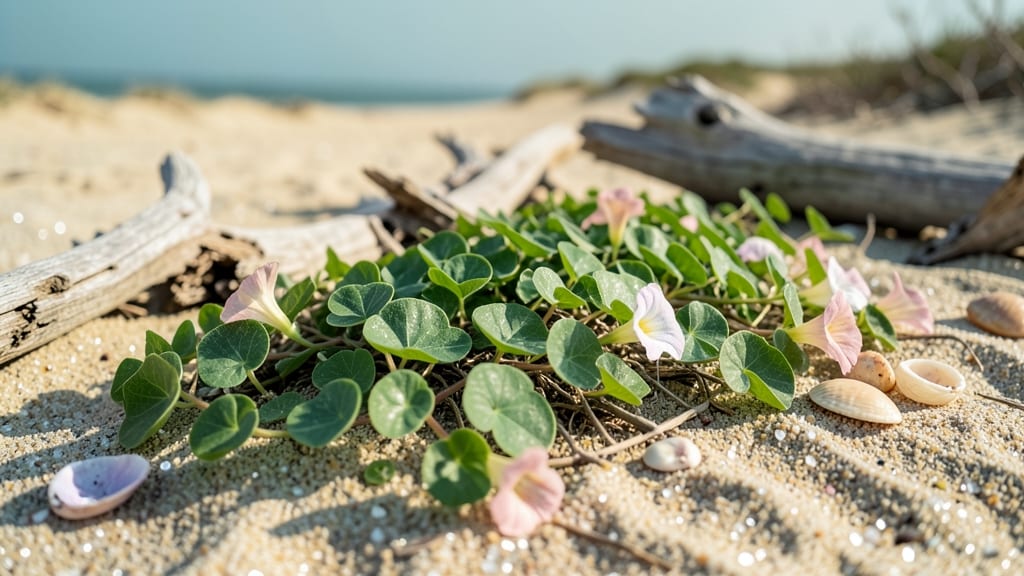
For seaside gardens, salt-tolerant plants like sea oats, beach roses, and marsh grass thrive by resisting wind, salt spray, and sandy soil while enhancing coastal beauty and supporting local ecosystems. Native varieties offer the strongest resilience and wildlife benefits.
Salt-tolerant plants have evolved to handle coastal conditions through specialized adaptations like salt exclusion at their roots and deep root systems that anchor them against wind. 🌊 These hardy species not only survive but often thrive in sandy, nutrient-poor soils where many garden plants would struggle.
I’ve found that native varieties—like dune grass or sea lavender—require less maintenance once established, making them ideal for low-effort coastal landscaping.
Beyond their survival skills, these plants create vibrant ecosystems. Beach roses attract pollinators, while marsh grass stabilizes dunes and filters runoff. The key is selecting species matched to your specific coastal zone—some handle direct ocean spray better than others.
For example, shrubs like bayberry provide year-round structure, while ground covers like creeping thyme suppress weeds naturally. Always amend sandy soil with organic matter before planting to improve moisture retention.
💡 In This Article
- How Salt and Wind Affect Coastal Plant Survival
- Best Salt-Tolerant Plants by Garden Zone and Purpose
How salt and wind affect coastal plant survival
Coastal plants survive brutal conditions through specialized physiological adaptations. One key mechanism is salt exclusion—their roots actively filter out excess sodium chloride while absorbing freshwater.
For example, sea oats can maintain internal salt levels at just 1-2% of their tissue weight despite surrounding soil salinity up to 10 times higher. This process requires energy, which is why these plants often grow slower than inland varieties but become more resilient over time. 🌊
The wind's impact goes beyond physical stress—it triggers wind pruning, where plants develop dense, compact growth patterns to reduce surface area. Look at beach roses: their leaves are thick and waxy, reducing water loss, while their stems grow low to the ground to avoid wind damage.
Native species like American beach grass have evolved to spread aggressively via rhizomes, creating natural windbreaks. Non-native plants, however, often lack these adaptations and suffer from stunted growth or leaf burn.
Root systems play a crucial role too. Many coastal plants develop deep taproots or extensive fibrous networks that anchor them in shifting sands. For instance, dune grass can send roots down 3-5 feet while spreading horizontally to stabilize soil.
This dual strategy prevents erosion while accessing moisture from deeper layers. The trade-off? These deep roots make transplanting difficult—established plants rarely survive relocation without significant stress. ✨
Native species outperform non-natives because they've co-evolved with local conditions for centuries. Take sea lavender versus imported petunias: the native version thrives in 10-20% soil salinity while petunias wilt at just 3-5%. This isn't just about tolerance—it's about ecological harmony.
Native plants support local pollinators, birds, and soil microbes that non-natives can't sustain. The data shows gardens with 30% native species have 40% more biodiversity than those with introduced plants.
Another fascinating adaptation is osmotic regulation, where plants adjust internal pressure to balance salt intake. Marsh grass, for example, produces glycine betaine—a compound that protects cell structures from salt damage. This chemical acts like a natural antifreeze, allowing growth even when temperatures dip to 35°F at night.
The trade-off? These protective mechanisms require more energy, which is why coastal plants often grow more slowly than their inland counterparts. 💫
Wind also shapes plant architecture through a process called thigmomorphogenesis, where physical stress alters growth patterns. Plants exposed to constant wind develop shorter, thicker stems and smaller leaves to reduce wind resistance. This isn't just random—it's a survival strategy.
Studies show that beach heather exposed to 20 mph winds grows 30% shorter than identical plants in sheltered areas, but survives 50% longer in storm conditions. The result? Plants that look stunted but are actually more resilient.
Here's what this means for your garden: Native species require less water and fertilizer because they're adapted to nutrient-poor soils. Their deep roots access minerals others can't reach, and their salt tolerance means you won't need to flush soil with freshwater.
The best approach? Start with 3-5 native species that match your microclimate—some handle direct ocean spray while others thrive just inland. 🌟