
Fertilization
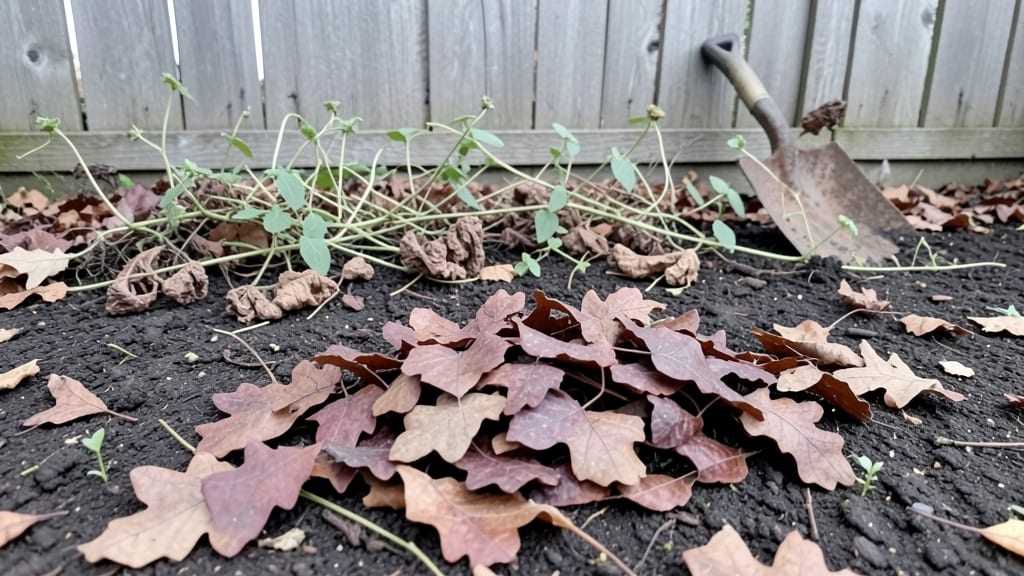
Mulched leaves in garden boost soil health by enriching organic matter, locking in moisture, and crowding out weeds while slowly converting into nutrient-packed compost. Spread a 2-4 inch layer around plants in early spring or after planting.
Leaf mulch works its magic through natural decomposition, where beneficial microbes break down the material over months, gradually releasing potassium, phosphorus, and nitrogen into the soil. 🌱 Unlike synthetic fertilizers, this process feeds plants steadily while improving soil texture—think of it as a slow-release, all-natural nutrient boost.
I’ve seen gardens thrive with just this one technique, especially in clay-heavy soils where water retention becomes a challenge.
For best results, shred leaves first—the finer the pieces, the faster they decompose. A 3-inch layer is ideal for most plants, but delicate perennials might need just 1 inch to avoid smothering. Pro tip: Mix in a handful of compost when applying to kickstart the nutrient cycle even faster.
💡 In This Article
- How Mulched Leaves Transform Garden Soil
- Step-by-Step Guide to Applying Leaf Mulch
How mulched leaves transform garden soil
Here's what's actually happening when you spread leaf mulch: it kickstarts a biological process where soil microbes—like bacteria and fungi—feast on the cellulose and lignin in leaves.
These microorganisms break down the organic matter through aerobic decomposition, releasing carbon dioxide and water while transforming the material into humus, a dark, spongy substance that holds nutrients and moisture.
Unlike grass clippings (which decompose faster but can mat and block water), leaves decompose slowly—typically taking 6-12 months—providing a steady nutrient release. 🔥
The magic happens in the soil structure too. Leaf mulch acts like a natural sponge, absorbing up to 30% more water than bare soil while reducing evaporation by 50% or more. The coarse texture creates air pockets, improving aeration for plant roots, while the gradual breakdown prevents compaction.
Compare this to straw mulch, which decomposes faster but lacks the nutrient density of leaves—straw primarily helps with moisture retention but doesn't enrich soil like leaf litter.
This process also prevents erosion by shielding soil from heavy rains and wind. When leaves decompose, they release potassium (critical for root health), phosphorus (essential for flowering), and nitrogen (for leaf growth) in a form plants can absorb over time.
The contrast with grass clippings is striking: while grass releases nitrogen quickly (sometimes too fast, causing burn), leaves provide a slow, balanced feed. For container gardens, leaf mulch can reduce watering needs by 30-40% while keeping roots cool. ✨
What most people don't realize is how the decomposition timeline affects nutrient availability. Early stages release simple sugars that feed microbes, while later stages produce complex organic compounds that improve soil aggregation.
The key factor is the carbon-to-nitrogen ratio—leaves have a high C:N ratio (around 40:1), which means they decompose slowly unless mixed with nitrogen-rich materials like compost or manure. This slow release makes leaf mulch ideal for perennials and shrubs that benefit from steady nutrition.
Consider these key factors when choosing leaf mulch over alternatives:
- Moisture retention: Leaf mulch holds 2-3 times more water than straw, making it superior for drought-prone areas
- Nutrient release: Takes 3-6 months to break down fully, unlike grass clippings (which decompose in 2-4 weeks)
- Weed suppression: Blocks 90% of light reaching soil, preventing weed seeds from germinating
- Soil temperature: Maintains 5-10°F cooler soil in summer and 5°F warmer in winter than bare soil
The sensory difference is noticeable too: fresh leaf mulch has an earthy, slightly sweet aroma from microbial activity, while older mulch develops a rich, damp forest-floor scent.
Over time, the texture changes from coarse shreds to a fine, crumbly humus that improves soil tilth—almost like adding a layer of natural topsoil. 💫
For maximum benefits, combine leaf mulch with other organic materials: mix in 10% compost to balance the C:N ratio and speed up decomposition, or layer with straw for better moisture control in hot climates.
The result? Soil that's darker, looser, and teeming with microbial life—all from something most people would otherwise rake away.