Planting
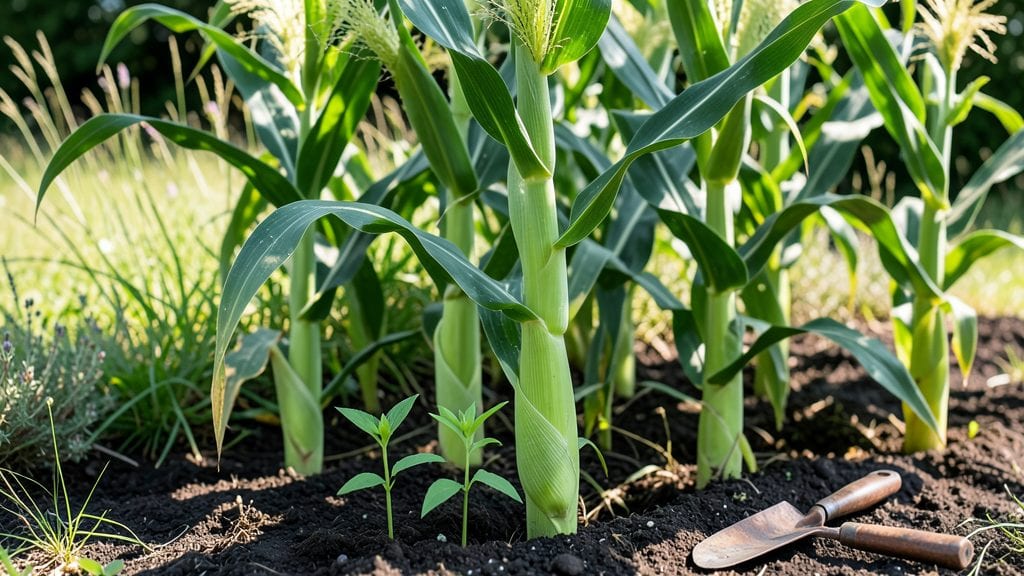
Proper garden corn spacing means the difference between ears of corn so big they won’t fit in your hand and puny, stunted plants fighting for sunlight. 🌽 I’ve learned the hard way—crowding my first rows left me with ears no bigger than my thumb, while the right spacing gave me 12-inch-long monsters last summer.
The secret lies in matching row distances to your corn variety: 30-inch rows for sweet corn and 36-inch rows for field corn, with plants spaced 8–12 inches apart in the row.
Soil prep matters too—loosen the top 12 inches and mix in compost before planting, so roots have room to stretch without competing.
When done right, you’ll see taller stalks, better pollination, and fewer diseases creeping in. The ears fill out plump and sweet, not scraggly and half-formed. Even in tight spaces, this spacing works—just adjust rows to fit your plot while keeping plants airy enough to breathe.
Regional tweaks matter: in hot, dry climates, space plants 12 inches apart to reduce water stress; in cooler areas, 8 inches keeps them cozy. Now let’s get those seeds in the ground the right way!
📚 In This Guide
- What you need
- Instructions
- Tips and common mistakes
- Wrapping up and next steps
What you need
- ● Corn seeds: Choose a variety suited to your climate (e.g., Sweet corn like 'Silver Queen' or 'Peaches and Cream'). Aim for 1–2 seeds per hill (or 1 seed per spot if direct-sowing). A 1-pound bag typically covers ~100–200 plants.
- ● Well-draining soil: Test your soil’s pH (ideal: 6.0–6.8). Amend with compost if needed (aim for 2–3 inches mixed into the top 6–12 inches of soil).
- ● Fertilizer: Use a balanced, high-phosphorus fertilizer (e.g., 10-10-10 or 5-10-10) at planting time (1–2 cups per 10 feet of row). Side-dress with nitrogen-rich fertilizer (e.g., blood meal) when plants reach 6–12 inches tall.
- ● Garden trowel or transplanting tool for digging holes or furrows.
- ● Measuring tape or ruler to mark precise spacing (rows 24–36 inches apart, hills 12–15 inches apart in rows, and 8–12 inches between seeds in a hill).
- ● Garden hose with shutoff valve for efficient watering (corn needs 1–2 inches of water per week).
- ○ Stakes or markers (optional but helpful for tracking rows and spacing).
- ● Gloves to protect your hands while planting.
- ● Mulch (straw or grass clippings) to retain moisture and suppress weeds.
- ● Row cover or shade cloth if planting early in cool climates.
- ● Trellis or cage for varieties that may need support (e.g., popcorn).
- ● Soil moisture meter to monitor watering needs during dry spells.
Step-by-Step garden corn spacing for optimal plant health
Here's the spacing method I've used for years to grow corn with minimal crowding and maximum yields.
🌱 Step 1: Plan Your Corn Rows Based on Variety
Start by choosing your corn variety—dwarf types like 'Golden Bantam' can grow in 12-inch rows, while standard varieties like 'Silver Queen' need 30-inch rows. I always sketch my garden layout first, marking row directions to match the sun's path for even growth. Corn thrives with 18-24 inches between plants in the row, so plan accordingly for your variety.
If you're planting multiple rows, space them 36 inches apart to allow for proper air circulation and easy access for weeding. This spacing prevents fungal diseases that thrive in tight, humid conditions. Mark your rows with stakes or a string line to ensure straight, even planting.
☀️ Step 2: Prepare the Soil and Plant at the Right Depth
Corn roots need loose, well-drained soil to establish quickly. Work the soil to a depth of 12 inches and mix in a balanced fertilizer like 10-10-10 at 1 pound per 100 square feet before planting. Plant seeds 1 inch deep—any deeper delays germination, and any shallower risks drying out.
Drop seeds every 12 inches in the row, then cover lightly with soil. Thin seedlings to 1 plant every 18-24 inches once they reach 6 inches tall. This ensures each plant has enough space to develop strong stalks and abundant ears without competing for nutrients.
🌿 Step 3: Monitor and Adjust for Crowding Early
Watch for signs of overcrowding in the first 4-6 weeks: leaves rubbing together, yellowing at the base, or stalks leaning toward the sun. These are clear signals to thin further. Use sharp scissors to snip weak seedlings at soil level—pulling risks disturbing roots of neighboring plants.
If you notice ears forming but stalks are spindly, your spacing is too tight. Corn needs room to develop strong tassels and silk, so don’t hesitate to thin again if needed. A well-spaced corn plant will have 12-18 inches of clear space around it by maturity.
✂️ Step 4: Maintain Spacing Through the Growing Season
As corn grows, focus on keeping the area around each plant clear of weeds. Corn is a heavy feeder, so mulch with 2-3 inches of straw once plants reach 2 feet tall to retain moisture and suppress weeds without smothering the stalks.
If you planted in blocks (not single rows), the windbreak effect between rows helps stabilize taller varieties. This reduces lodging—the frustrating habit of corn stalks toppling over before harvest. Check your plants weekly for pests like corn earworms and treat organically if needed to preserve plant vigor.
Tips & tricks for perfect garden corn spacing
These proven strategies will help you avoid the most common corn-growing mistakes and achieve healthier plants with bigger yields.
Variety Matters: The 12-inch rows for dwarf varieties like 'Golden Bantam' and 30-inch rows for standard types like 'Silver Queen' aren't arbitrary—they reflect each plant's mature size. I've learned this the hard way after seeing spindly stalks in tight spaces. Always check your seed packet for recommended spacing, as some sweet corn varieties can grow surprisingly tall. The 18-24 inch spacing between plants in Step 1 gives roots room to spread, which directly impacts how many ears each stalk will produce.
Soil Preparation Secret: That 12-inch soil depth you're working in Step 2 isn't just about loosening dirt—it's creating a root-friendly environment. I add compost to the bottom of that 12-inch zone because corn roots love deep, nutrient-rich soil. The 10-10-10 fertilizer recommendation is perfect for young plants, but I often add a nitrogen boost later in the season when tassels appear. Remember, corn is a heavy feeder, and proper soil prep prevents nutrient deficiencies that show up as yellow leaves.
Thinning Technique: When you thin seedlings to 1 plant every 18-24 inches in Step 2, don't pull—snip with clean scissors. I've seen gardeners yank seedlings, which disturbs neighboring roots and creates entry points for disease. The 6-inch height threshold for thinning is crucial because by then, you can clearly see the strongest plants. This single step can double your yield—trust me, I've compared crowded plots to properly thinned ones side by side.
Early Crowding Warning Signs: Those 4-6 weeks in Step 3 are your best chance to catch overcrowding before it's too late. The leaf rubbing and yellowing at the base aren't just cosmetic—they indicate plants are competing for sunlight and nutrients. I've seen corn plants develop "blind stalks" (no ears) when crowded too early. The 12-18 inches of clear space by maturity isn't just theoretical; it's what allows each plant to develop those energy-intensive ears of corn.
Pro Tips for Garden Corn Spacing
- These proven strategies will help you avoid the most common corn-growing mistakes and achieve healthier plants with bigger yields.
- Variety Matters: The 12-inch rows for dwarf varieties like 'Golden Bantam' and 30-inch rows for standard types like 'Silver Queen' aren't arbitrary—they reflect each plant's mature size.
- Soil Preparation Secret: That 12-inch soil depth you're working in Step 2 isn't just about loosening dirt—it's creating a root-friendly environment.
Frequently asked questions
Got questions about garden corn spacing?
You’re not alone! Here are answers to the most common concerns—from beginners to seasoned gardeners—to help you grow the best corn crop possible.
What’s the ideal spacing for sweet corn in a home garden?
For most sweet corn varieties, plant seeds 1 inch deep and space them 4–6 inches apart within rows. Keep rows 24–36 inches apart to allow airflow and easy harvesting. Tighter spacing (like 12 inches) can work in small gardens but may reduce yields or lead to disease.
When is the best time to plant corn for proper spacing?
Corn thrives in warm soil (at least 60°F), so wait until 2–3 weeks after your last frost date—typically April–May in most U.S. regions. If your growing season is short, opt for early-maturing varieties (60–70 days) to ensure full development before cold sets in.
Can I plant corn too close together? What happens if I do?
Yes! Overcrowding leads to poor air circulation, increasing fungal diseases like corn smut or gray leaf spot. Plants may also compete for nutrients, resulting in smaller ears or stunted growth. If you’ve already planted too close, thin seedlings to 6-inch spacing once they’re 4–6 inches tall.
Is there a way to save space if I have a small garden?
Try square-foot gardening: Plant 4 seeds per square foot (12-inch spacing) in a grid pattern. For vertical space, use trellises or cages for dwarf varieties like ‘Golden Bantam’ (though most sweet corn needs ground support). Just be prepared for slightly lower yields per plant.
My corn plants are leaning or falling over—did I space them wrong?
Leaning corn often signals overcrowding or weak stems from poor spacing or nutrient deficiencies (like potassium). Check your spacing first—rows should be at least 24 inches apart. If stems are thin, side-dress with compost or a balanced fertilizer (10-10-10) at tasseling stage. Staking tall varieties may also help.
Can I plant corn in containers or raised beds with proper spacing?
Yes! In containers, use large pots (at least 12–18 inches deep) and plant 1–2 seeds per pot with 6-inch spacing. For raised beds, follow standard spacing (4–6 inches apart in rows 24–36 inches apart). Just ensure containers have drainage holes and deep-rooted varieties get enough space.
Wrapping up and next steps
Perfecting your garden corn spacing is the secret to a bountiful harvest—whether you’re growing sweet corn for summer feasts or field corn for livestock. 🌽 By following proven row distances (like 24–36 inches between plants and 30–36 inches between rows), you’ll give your stalks the elbow room they need to thrive, reduce competition, and boost yields. Now that you’re armed with the right spacing strategies, it’s time to roll up your sleeves and plant!
Start small with a test patch this season, track your progress, and adjust as needed. Happy planting—your future corn cobbles (or popcorn!) are waiting! 🌱