
Shrubs
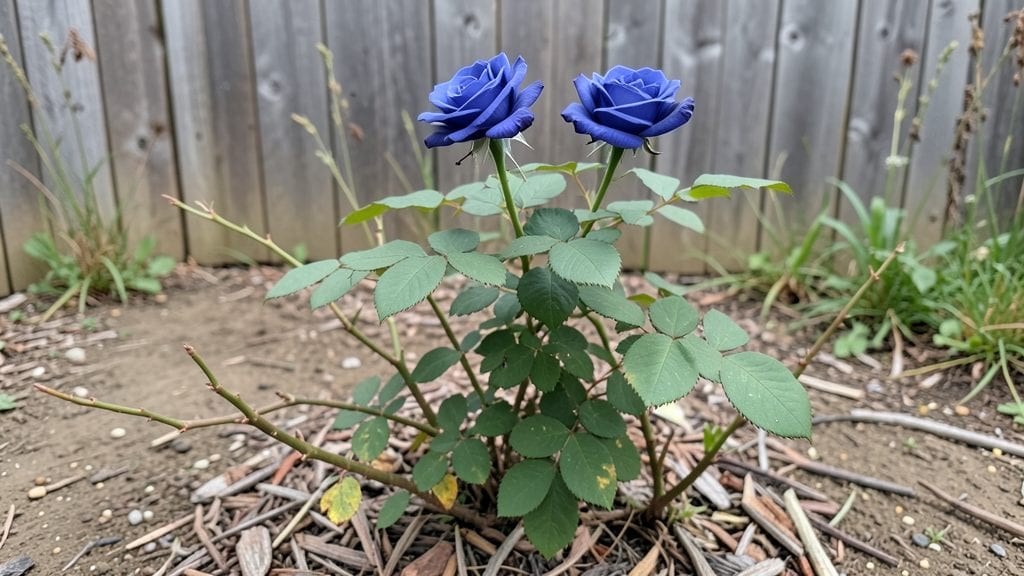
Blue rose gardening reveals its magic when you choose the right varieties—those deep indigo blooms are stunning once you crack the care secrets. 🌸 I've spent years chasing that elusive hue, and the secret lies in hybrid teas like 'Blue Moon' that hold their color. their color longer than most.
These aren't your grandma's roses—they're bold, fragrant, and designed to outlast fading problems.
The real magic happens in well-draining soil mixed with compost, where roots stay cool but never soggy. Morning sun and afternoon shade preserve that signature blue hue, while consistent watering—about 1 inch per week—keeps blooms vibrant without encouraging mildew.
Pruning after each flush of flowers extends the season, and a light dusting of sulfur once a month prevents that dreaded pink shift.
Picture your garden in summer: clusters of velvety blue blooms releasing their perfume as you pass, petals that never bleach in the sun. With the right variety and this care routine, you'll get three flushes of blooms per year instead of one.
The fragrance lingers longer too, making evenings on the patio unforgettable.
Works in zones 5-9 with winter protection, and thrives in containers for patios or small yards. The key is patience—true blue roses take a year to show their full color, but once they do, they become the star of every season. Let's get those roots settled!
📚 In This Guide
- What you need
- Instructions
- Tips and common mistakes
- Wrapping up and next steps
What you need
- ● Blue-hued plants: 3–5 Delphinium (larkspur) or Helleborus (Lenten rose) plants (choose varieties like 'Pacific Giant' or 'Blue Moon').
- ● Well-draining soil: 10–15 cubic feet of loamy, slightly acidic soil (pH 6.0–7.0) mixed with 2–3 parts compost or peat moss.
- ● Fertilizer: 1 lb of balanced 10-10-10 fertilizer or a slow-release rose-specific formula.
- ● Mulch: 2–3 inches of organic mulch (straw, bark, or pine needles) to retain moisture.
- ● Gardening gloves (1 pair, heavy-duty for thorny plants like Delphinium).
- ● Trowel or hand shovel (for transplanting seedlings).
- ● Pruners (sharp, sterilized pair for trimming dead blooms).
- ● Watering can or hose with a gentle spray nozzle (1–2 gallons capacity).
- ○ Stakes or trellis (optional, for tall Delphinium varieties—2–3 stakes per plant).
- ● Sunlight: 6+ hours of full sun daily (partial shade in hot climates).
- ● Water source: Consistent access to water (blue roses love moisture but hate soggy roots!).
- ● Weather awareness: Protect from strong winds (tall varieties may need staking).
How to cultivate blue roses for year-round fragrance and beauty
Here's the straightforward approach I've used to keep blue roses blooming lushly—no fancy tricks, just reliable techniques.
🌱 Step 1: Select the Right Varieties and Prepare the Soil
True blue roses don't exist in nature, but hybrid varieties like 'Blue Moon' and 'Blue Yesterday' come closest. I always start with disease-resistant bareroot plants in early spring. Amend your soil with 2-3 inches of compost and work in 1 cup of bone meal per plant—this gives roots the phosphorus they need for strong development.
Blue roses thrive in well-draining, slightly acidic soil (pH 6.0-6.5). If your soil is heavy clay, mix in 1 part peat moss to 3 parts garden soil to improve aeration. The key is loose, fertile soil that holds moisture without becoming waterlogged. Test your soil's pH before planting—you can adjust with sulfur if needed.
☀️ Step 2: Plant in Full Sun with Proper Spacing
Blue roses demand 6+ hours of direct sunlight daily. I plant mine where they'll receive morning sun and afternoon shade in hot climates—this prevents leaf scorch while ensuring full bloom potential. Dig holes twice as wide as the root ball but no deeper, as planting too deep suffocates roots.
Space plants 3-4 feet apart—crowding leads to poor airflow and fungal diseases. Gently loosen the roots if they're circling, then place the plant so the graft union sits 1-2 inches above soil level. This ensures the plant grows upward rather than downward. Water deeply right after planting to settle the soil.
💧 Step 3: Water Deeply and Mulch for Consistent Moisture
Blue roses need 1-1.5 inches of water weekly, but they hate soggy roots. I water deeply 2-3 times per week in summer, aiming for the soil rather than the leaves to prevent fungal issues. The best time to water is early morning—this gives foliage time to dry before evening.
Spread 2-3 inches of mulch around each plant, keeping it 6 inches away from the stem to prevent rot. I use shredded bark mulch because it breaks down slowly and improves soil structure over time. Replenish mulch annually to maintain moisture and suppress weeds.
✂️ Step 4: Prune for Shape and Encourage Continuous Blooms
Prune blue roses in early spring before new growth appears. Remove any dead, diseased, or crossing branches first—this improves airflow and reduces pest problems. Then cut back last year's growth by one-third to encourage bushier growth and more blooms.
Throughout the growing season, deadhead spent blooms by cutting back to the first set of healthy leaves. This signals the plant to produce more flowers. In late summer, give your roses a light pruning to shape them and remove any suckers growing below the graft union—these weaken the plant and reduce blue pigmentation.
🌿 Step 5: Fertilize and Protect for Year-Round Health
Feed blue roses with a balanced, slow-release fertilizer (10-10-10) in early spring, then switch to a low-nitrogen, high-phosphorus formula (5-10-5) when blooms appear. I apply fertilizer every 6-8 weeks during the growing season, always watering before and after to prevent root burn.
Watch for common pests like aphids and spider mites—blue roses attract them with their vibrant foliage. Spray plants with neem oil at the first sign of trouble. In winter, protect young plants with 2-3 inches of mulch and wrap tender varieties in burlap if temperatures drop below 20°F.
Tips & tricks for perfect blue rose cultivation
Here's what I've learned after years of growing vibrant blue roses that bloom reliably all season long.
Soil Preparation Secret: Don't just amend your soil—test it first! I use a simple soil test kit to confirm the pH is between 6.0-6.5 before planting. If your soil tests higher than 6.5, mix in elemental sulfur (about 1 pound per 100 square feet) and retest after 2-3 months. The right pH makes all the difference for those stunning blue hues to develop fully.
Planting Technique: When planting your bareroot blue roses, soak the roots in water for 2-3 hours before placing them in the hole. This prevents transplant shock and helps roots establish faster. Also, make sure to position the graft union (that visible bump where the plant was grafted) about 1-2 inches above soil level—this prevents the plant from growing downward and losing its vibrant blue color.
Watering Wisdom: The 1-1.5 inches of water per week guideline works, but timing matters just as much. I set up a simple drip irrigation system on a timer that delivers water early in the morning. This gives the plants time to dry out during the day, which prevents fungal diseases that love damp foliage. If you water in the evening, leave plenty of time for the leaves to dry before nightfall.
Winter Protection Strategy: For those tender blue rose varieties, don't wait until the first frost to protect them. When temperatures consistently drop below 30°F at night, wrap the canes with burlap and mound an extra 2-3 inches of mulch around the base. This creates an insulating barrier that helps maintain root temperature above the critical 20°F threshold mentioned in the instructions. I've saved many plants this way during unexpectedly cold winters.
Pro Tips for Blue Rose Gardening
- Here's what I've learned after years of growing vibrant blue roses that bloom reliably all season long.
- Soil Preparation Secret: Don't just amend your soil—test it first!
- Planting Technique: When planting your bareroot blue roses, soak the roots in water for 2-3 hours before placing them in the hole.
Frequently asked questions
Got questions about growing your own blue rose garden? You’re not alone! Here are answers to the most common curiosities—from timing to troubleshooting—so you can dive in with confidence.
Can I really grow a true blue rose, or is it a myth?
A true blue rose (like the iconic Rosa ‘Blue Moon’) doesn’t exist in nature—roses naturally produce pink, red, or white blooms due to pigment chemistry. However, blue-hued roses (like ‘Bluestar’ or ‘Blueberry Hill’) achieve their cool tones through anthocyanin pigments and careful breeding. These varieties are the closest you’ll get to "blue"!
When is the best time to plant blue roses for year-round blooms?
For spring planting, aim for early March to April (after the last frost) to give roots time to establish before summer heat. If planting in fall, choose September to October—roots grow slowly in cool weather, reducing transplant shock. Ever-blooming varieties (like ‘Blueberry Hill’) thrive with two plantings per year (spring + fall) for continuous color.
How often should I water blue roses, and what’s the secret to keeping them fragrant?
Water deeply 2–3 times per week (more in extreme heat) to encourage deep root growth. Morning watering prevents fungal issues. For fragrance, prune lightly after blooms fade (never cut into old wood) and fertilize with low-nitrogen, high-phosphorus feed (like 5-10-5) in early spring. Deadheading spent blooms redirects energy to new, fragrant flowers!
What’s the #1 pest or disease threat to blue roses, and how do I prevent it?
The biggest culprits are aphids (they suck sap and spread viruses) and black spot fungus (those ugly dark spots). Prevent aphids with neem oil sprays or ladybugs. For black spot, space plants 3–4 feet apart for airflow, water at the base (not leaves), and apply copper fungicide at the first sign of spots. Resistant varieties like ‘Bluestar’ are your best bet!
Are there low-maintenance alternatives to blue roses for a fragrant garden?
If blue roses seem high-maintenance, try these fragrant, low-fuss alternatives:
- Lavender ( Drought-tolerant, repels pests, and blooms all summer)
- Dianthus ( Clove-scented, thrives in poor soil, and reblooms easily)
- Russian Sage ( Silvery foliage, deer-resistant, and attracts pollinators)
- Cleome ( Spiky blooms, fragrant foliage, and self-seeds)
For blue hues, pair with blue salvia, catmint, or delphiniums for a cohesive look!
Wrapping up and next steps
Blue rose gardening isn’t just about cultivating a rare beauty—it’s about embracing patience, creativity, and the joy of nurturing something extraordinary. 🌸 With the right low-maintenance care, fragrant blooms, and year-round strategies, you’re well on your way to transforming your garden into a serene sanctuary.
Whether you’re experimenting with Hellebores, Bluebell roses, or other stunning alternatives, remember that every gardener starts somewhere.
Ready to take the next step? Start small—plant a single blue-hued beauty this season and watch your confidence (and garden!) grow. Share your progress, ask questions, and connect with fellow gardeners to keep the inspiration blooming. Happy gardening! 🌱