
Tools
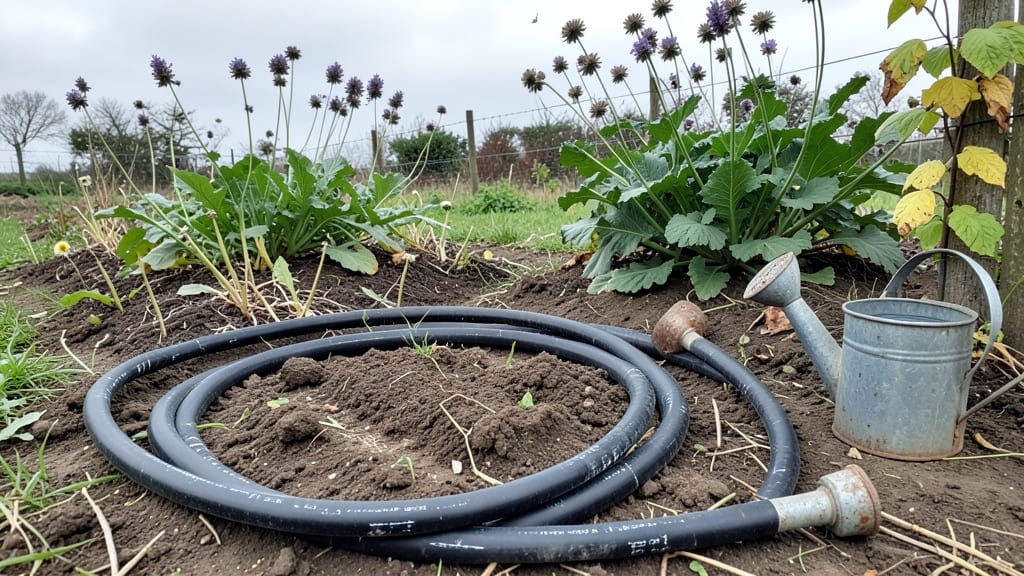
The biggest garden hose you can buy reaches 5/8-inch to 3/4-inch diameter, delivering 20-30 gallons per minute (GPM) for heavy-duty tasks like irrigating large farms, watering expansive lawns, or even fire suppression. These hoses use reinforced rubber or vinyl to handle high pressure without bursting, but always verify the PSI rating before use.
The largest hoses are designed for maximum water output, making them ideal for professional or agricultural use where speed and volume matter.
A 3/4-inch diameter hose moves nearly twice the water of a standard 1/2-inch hose, but the trade-off is slightly reduced pressure—something you’ll notice when fighting stubborn clogs or filling large tanks. 🔥 For farm irrigation, I recommend checking for burst-resistant couplings and pressure regulators, as these prevent damage during long runs.
The material choice also matters: rubber hoses last longer in extreme weather, while vinyl options are lighter and more affordable for occasional use.
💡 In This Article
- How Hose Diameter Affects Water Flow and Pressure
- Top Heavy-Duty Hoses for Farm, Fire, or Large Lawns
How hose diameter affects water flow and pressure
The diameter of a garden hose directly impacts its flow rate and pressure due to fluid dynamics principles. According to the Bernoulli principle, wider hoses reduce friction against the water's edges, allowing more volume to pass through per minute.
A 3/4-inch hose moves about 20-30 GPM at 40 PSI, while a 5/8-inch delivers roughly 15-20 GPM—a 30% increase in flow for just a 1/8-inch increase in diameter. The trade-off? Thicker hoses slightly reduce pressure at the nozzle due to increased surface area resistance. 🔥
Here’s the physics breakdown: Water velocity slows in wider hoses (conservation of energy), but volume increases exponentially. For example, a 1/2-inch hose delivers only 8-12 GPM—half the output of a 3/4-inch model.
The key factor is cross-sectional area: A 3/4-inch hose has 44% more internal space than a 5/8-inch, explaining why it’s the gold standard for heavy-duty tasks.
Rigid aluminum or steel hoses (used in fire suppression) maintain 90%+ pressure over long runs, while flexible rubber hoses lose 10-20 PSI per 100 feet due to material stretch.
Most people assume thicker hoses always mean better performance, but that’s not true for all uses. A 3/4-inch hose is overkill for delicate tasks like watering flowers—its high flow can erode soil. For pressure-sensitive jobs (e.g., pressure washers), a 5/8-inch with a high-PSI rating (100+) is ideal.
The material also matters: Reinforced rubber hoses handle 150 PSI without kinking, while standard vinyl cracks at 80 PSI. 💫
Consider this real-world example: A farmer using a 3/4-inch rubber hose for irrigation can cover 2 acres/hour at 25 GPM, while a 1/2-inch vinyl hose would take 3+ hours for the same area.
The difference? The thicker hose’s 2.5x flow capacity and durability under 120 PSI. For fire hoses, the standard 2.5-inch diameter delivers 250+ GPM—proving why size scales non-linearly with performance.
Pro tip: Check the PSI/GPM chart on your hose’s label. A 3/4-inch hose rated for 100 PSI will deliver 20 GPM at 40 PSI but only 12 GPM at 80 PSI due to internal resistance.
Always match the hose to your pressure source—using a 3/4-inch hose with a 150 PSI pump risks bursting unless it’s reinforced. ✨
For long runs (100+ feet), add a pressure booster pump to maintain flow. The science is clear: Diameter, material, and pressure work together—ignore one, and you’ll lose efficiency or risk failure. 🌟