
Picking
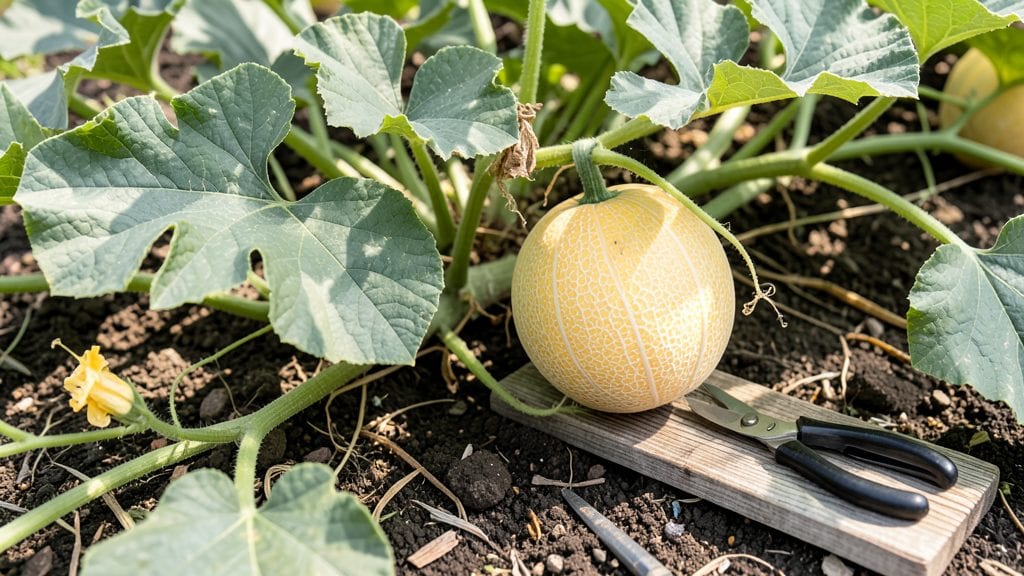
Picking cantaloupe from your garden at the right time means the difference between a sweet, juicy reward and a disappointing bite 🍈—and the clues are all there if you know where to look.
Ever bitten into a cantaloupe that’s either rock-hard or mushy? Knowing the exact moment to harvest ensures sweet, juicy perfection—no more wasted fruit or missed harvests.
The trick lies in watching for three key signals: a creamy rind, a fragrant aroma, and a vine that lets go with a gentle tug.
Cantaloupes in USDA Zone 6a typically ripen between 70 and 90 days after planting, but heat and humidity can speed things up. That’s why relying on visual cues—like a tan-colored rind or a stem that pulls away easily—is far more reliable than counting days alone.
In this guide, I’ll walk you through the three foolproof signs your cantaloupe is ready, plus how to avoid the most common mistakes that leave you with underripe or overripe fruit. No more guesswork—just perfect melons every time.


3 Unmistakable signs your cantaloupe is ripe for picking
There’s nothing worse than slicing into a cantaloupe that’s still hard as a rock or—even worse—already turning to mush. The good news? With these 3 foolproof signs, you’ll never second-guess when to pick your cantaloupe again.
No more guesswork, no more wasted fruit. Just sweet, juicy perfection straight from your garden to your table.
Cantaloupes don’t ripen well after being picked, so timing is everything. Unlike some fruits that continue to soften off the vine, cantaloupes reach their peak flavor only when harvested at the right moment.
That means paying attention to visual cues, tactile signals, and even aroma—your nose knows best, too!
Here’s how to tell your cantaloupe is ready to harvest, step by step, so you can enjoy that first bite of summer sweetness without any regrets.
- 1. Rind Color Changes: Look for a creamy yellow or tan hue (not green) with net-like patterns that darken. Avoid dull or pale rinds—those mean it’s not ready yet.
- 2. Stem End Separates: The stem end near the vine should turn brown and dry, and the fruit should slip easily when you gently tug it. If it doesn’t budge, wait a few more days.
- 3. Sweet Aroma at the Stem: Give the stem end a sniff. A strong, sweet, musky scent (like cantaloupe should smell) means it’s ripe. No smell? Not ready yet.
Let’s break down each sign in more detail so you can confidently harvest your cantaloupe at its peak. First up: the rind color, which is your first visual clue that the fruit is maturing.
A ripe cantaloupe’s skin should transition from green to a creamy yellow or tan, often with darker net-like patterns. These patterns aren’t just for show—they’re a natural part of the ripening process and indicate the fruit is ready.
If you’re still seeing green patches or a dull, pale color, your cantaloupe needs more time on the vine. Green areas mean the fruit isn’t fully matured, and while it might soften slightly off the vine, it won’t reach its full sweetness.
Patience is key here—wait until the entire rind (except the blossom end) turns that signature creamy hue.
Next, focus on the stem end, where the cantaloupe connects to the vine. This is one of the most reliable indicators of ripeness. A ripe cantaloupe’s stem end will turn brown and dry, almost papery to the touch.
When you gently twist or tug the fruit, it should slip free from the vine with minimal effort. If it resists, it’s not ready yet.
This tactile test is especially useful if you’re unsure about the rind color, as it gives you a hands-on way to confirm ripeness. Just be gentle—cantaloupes are delicate when ripe, and rough handling can cause bruising.
If the stem end is still green or firm, give it another day or two. Overripe cantaloupes can be mushy, but underripe ones are even worse—they’ll taste bland and lack that signature sweetness.
The final clue comes from your sense of smell: the aroma at the stem end. A ripe cantaloupe releases a powerful, sweet, musky scent that’s unmistakable. If you’re standing near the vine and you can’t smell it, the fruit isn’t ready.
This scent is your body’s way of telling you the sugars inside are fully developed. Some gardeners even describe it as a mix of honey and cantaloupe—trust your nose!
If your cantaloupe passes all three tests—creamy rind, brown stem end, and sweet aroma—it’s time to harvest. Use a sharp knife or your hands to gently twist the fruit free from the vine.
Avoid pulling too hard, as this can damage the vine or leave part of the stem attached, which can shorten the fruit’s shelf life.
Once harvested, store your cantaloupe in a cool, dry place (like a pantry) for up to a week. But why wait? The best time to eat it is within 24 hours of picking, when the flavors are at their peak.
Now you’re ready to enjoy the fruits of your labor—no more guessing, no more disappointments, just perfect cantaloupes every time.
How to avoid common mistakes that ruin cantaloupe harvests
Picking cantaloupe at the wrong time can turn your hard work into disappointment—either rock-hard fruit or overripe mush. Even experienced gardeners sometimes miss the perfect harvest window because they ignore subtle vine signals or rely on guesswork. The good news? These mistakes are easily preventable with the right knowledge.
One of the biggest errors is harvesting based on days after planting alone. While cantaloupes typically mature in 75-90 days, environmental factors like temperature swings or water stress can delay ripening.
Another common trap is overlooking vine behavior—healthy cantaloupe vines send clear signals when it's time to pick, but many gardeners miss them.
Picking cantaloupe when the stem end turns brown but the fruit hasn't fully slipped from the vine. This means it's overripe—often with seedy, watery flesh and a fermented aroma. Always check for easy separation (a gentle tug should release it) AND a sweet scent at the stem end.
Another frequent blunder is ignoring the vine's yellowing leaves. When cantaloupe vines start showing yellowing foliage near the fruit, it’s a sign the plant is redirecting energy to ripening. If you wait too long, the vine may die back completely, leaving you with no second chances.
I’ve seen gardeners harvest too early just to avoid this, but underripe cantaloupes lack sweetness and develop mealy texture.
Post-harvest care is just as critical. Once picked, cantaloupes don’t ripen further—they either peak at harvest or decline rapidly. Store them at room temperature (not in the fridge) until fully ripe, then move to the crispest part of your fridge for up to 1 week.
Cut fruit should be eaten within 2-3 days to preserve flavor and texture.
Pro tip: If you’re unsure about ripeness, cut one open as a test. A ripe cantaloupe has bright orange-red flesh, small seeds, and a juicy, aromatic pulp.
If it’s pale or seedy, it’s past its prime. This small sacrifice saves the rest of your harvest from going to waste!
Finally, keep an eye on pests and diseases that can stress the plant and affect fruit quality. Aphids or powdery mildew can weaken vines, leading to poorly developed fruit. Use neem oil or row covers early in the season to protect your cantaloupes from these issues.