
Watering
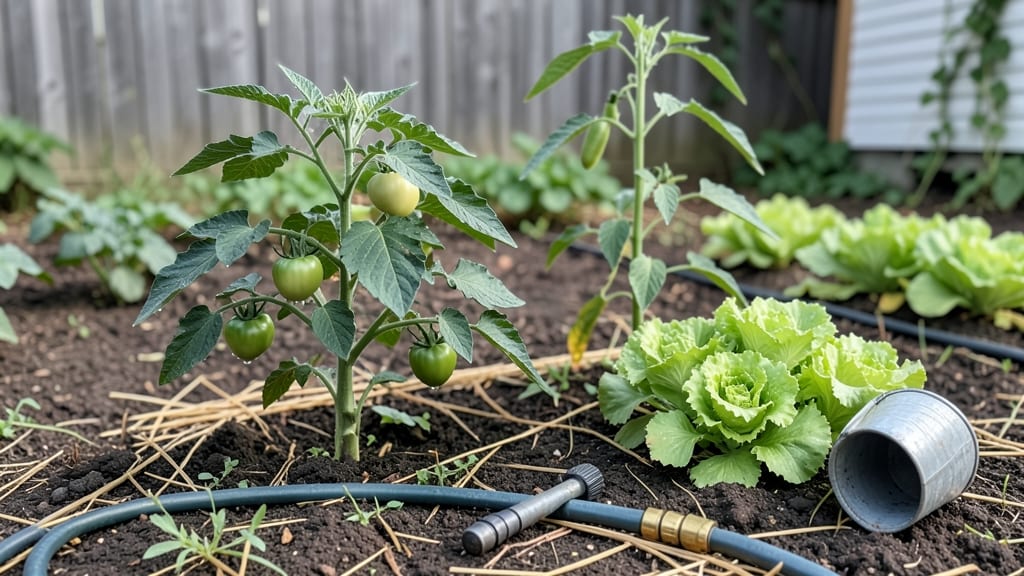
Watering your vegetable garden isn't just about keeping soil damp—it's the secret to bursting tomatoes, crisp lettuce, and roots that dive deep for nutrients. I learned the hard way that too much or too little water stresses plants more than pests ever could.
The right timing and method make all the difference, especially when summer heat turns soil to concrete or spring rains turn your plot into mud.
You don't need fancy equipment—just a simple soil moisture meter (or your finger), a watering can or hose with a gentle nozzle, and a schedule that changes with the season.
Most vegetables prefer 1-1.5 inches of water per week, delivered either through deep waterings every few days or consistent drip irrigation. The key is keeping moisture steady at the root zone, not just wetting the surface where evaporation steals every drop.
When done right, you'll see plants that stay upright even in heatwaves, leaves that stay crisp instead of wilting by noon, and roots that explore the soil instead of circling in desperation. The payoff isn't just in the harvest—it's in the way your garden looks alive, not just surviving.
Let's get into the exact schedule and techniques that work for every type of vegetable.
This works whether you're working with a raised bed, in-ground rows, or containers on your patio. The principles stay the same—just adjust the volume and timing. Here's how to make watering work for your specific setup.
📚 In This Guide
- What you need
- Instructions
- Tips and common mistakes
- Wrapping up and next steps
What you need
- ● Water source: Garden hose (50+ ft, ½-inch diameter for even watering) or a watering can (1+ gallon capacity).
- ● Watering wand or nozzle: Adjustable spray nozzle (e.g., showerhead or oscillating) for controlled flow.
- ○ Drip irrigation kit (optional but recommended): Includes soaker hoses (20+ ft) or drip lines with emitters (0.5–4 GPH) for targeted hydration.
- ● Timer or smart irrigation controller: Programmable timer (e.g., 12V battery-operated) or Wi-Fi-enabled system for hands-free scheduling.
- ● Water storage: 5+ gallon watering can or rain barrel (55+ gallons) for collecting rainwater.
- ● Mulch: Organic mulch (straw, wood chips, or shredded leaves) to retain moisture (1–2 inches thick).
- ● Moisture meter: Digital probe to check soil moisture levels (e.g., 0–100% humidity range).
- ● Water pressure gauge: Ensures consistent flow (ideal: 30–50 PSI).
- ● Water breaker or splitter: For dividing water flow to multiple zones.
- ● PVC pipes or tubing: Customize drip irrigation layouts (½-inch diameter).
- ● Solar-powered pump: For gardens without easy water access.
Instructions for watering vegetable gardens like a pro
Mastering watering isn't about frequency—it's about consistency and timing. Here's how to keep your vegetables thriving with minimal effort.
Water Early in the Morning for Best Results
Set your watering schedule for the first two hours after sunrise. This timing ensures water soaks into the soil before the heat of the day causes evaporation. I always check the forecast first—if rain is expected, skip the morning watering to avoid over-saturation. Most vegetables need about 1 inch of water per week, delivered either through rainfall or irrigation.
Use a rain gauge or a straight-sided container to measure water depth. Place it in your garden bed and fill it with water from your hose or sprinkler. When the water reaches 1 inch, you've met your plants' weekly requirement. This method prevents both underwatering and overwatering, which can lead to root rot or weak growth.
Water Deeply to Encourage Strong Root Systems
Instead of light, frequent watering, focus on deep, thorough watering sessions. This encourages roots to grow deeper into the soil, making plants more drought-resistant. For most vegetables, water until the soil is moist 6 inches deep. You can test this by inserting a screwdriver or long stick into the soil—if it slides in easily, you've watered deeply enough.
I like to use a soaker hose or drip irrigation system for this step. These tools deliver water slowly and directly to the root zone, reducing waste and preventing fungal diseases that can occur with overhead watering. Avoid watering the leaves, especially in the evening, as this can create a damp environment that invites pests and diseases.
Adjust Watering Based on Vegetable Type and Growth Stage
Not all vegetables have the same water needs. Leafy greens like lettuce and spinach prefer consistently moist soil, while root vegetables like carrots and potatoes need even moisture to prevent cracking. Tomatoes and peppers, on the other hand, benefit from slightly drier soil as they mature to prevent blossom-end rot.
Young seedlings and newly transplanted plants need more frequent watering—about every 2-3 days—until they establish roots. Once they're growing steadily, you can space watering out to every 4-5 days, depending on the weather. Always water at the base of the plant to keep foliage dry and reduce the risk of disease.
Monitor Soil Moisture and Adjust as Needed
Pay attention to the soil's texture and color. Dry soil will pull away from the sides of your containers or garden bed, and its color will appear lighter. When you press your finger about 1 inch into the soil, it should feel slightly damp but not soggy. If it feels dry, it's time to water.
Use mulch to help retain moisture and regulate soil temperature. A 2-3 inch layer of organic mulch, like straw or wood chips, will keep the soil cool and reduce evaporation. Check your garden after heavy rains—sometimes, the soil stays too wet, leading to root rot. If the top 2 inches of soil remain waterlogged for more than a day, consider improving drainage or reducing watering frequency.
Finish Watering by Evening to Prevent Evaporation
If you can't water in the morning, the next best time is late afternoon or early evening. Avoid watering in the late evening, as damp foliage overnight can encourage fungal growth. Use a sprinkler or hose with a gentle setting to avoid disturbing the soil or damaging young plants.
As your vegetables mature, you'll notice changes in their water needs. For example, cucumbers and squash require more water as they produce fruit, while herbs like basil and cilantro prefer slightly drier conditions. Always observe your plants—they'll tell you what they need through their appearance. Yellowing leaves often signal overwatering, while wilting indicates a need for more moisture.
Tips & tricks for perfect vegetable garden watering
Consistency is everything when it comes to watering your vegetable garden—here are my go-to strategies for keeping your plants happy and healthy without wasting a drop.
The Morning Advantage: Watering within the first two hours after sunrise, as recommended in Step 1, gives water time to penetrate the soil before evaporation kicks in. I've found that using a simple rain gauge or even a straight-sided container placed in your garden bed makes all the difference. This ensures you're delivering that critical 1 inch of water per week without guesswork. Pro tip: Set a reminder on your phone for the same time each morning to build this habit.
Deep Watering Technique: For Step 2, I can't emphasize enough how important it is to water until the soil is moist 6 inches deep. Use a screwdriver or long stick to check—if it slides in easily, you're golden. I've switched to a soaker hose for this step, and it's been a game-changer. It delivers water directly to the roots while keeping leaves dry, which prevents fungal diseases that can occur with overhead watering.
Vegetable-Specific Adjustments: Not all plants are created equal. In Step 3, you'll notice that leafy greens like lettuce and spinach need consistently moist soil, while tomatoes and peppers actually prefer slightly drier conditions as they mature. For young seedlings, I've found that watering every 2-3 days until they establish roots makes all the difference. Once they're growing steadily, you can stretch that to every 4-5 days, but always check the soil first—it's the best indicator of what your plants really need.
Soil Test Trick: In Step 4, when you press your finger about 1 inch into the soil and it feels slightly damp but not soggy, that's your sweet spot. I've learned to pay attention to the soil's texture and color—dry soil will pull away from container edges and look lighter. For containers or raised beds, I like to add a 2-3 inch layer of organic mulch, which helps retain moisture and keeps the soil cool. This small step has significantly reduced my watering frequency during hot summer months.
Pro Tips for Watering Vegetable Garden
- Consistency is everything when it comes to watering your vegetable garden—here are my go-to strategies for keeping your plants happy and healthy without wasting a drop.
- The Morning Advantage: Watering within the first two hours after sunrise, as recommended in Step 1, gives water time to penetrate the soil before evaporation kicks in.
- Deep Watering Technique: For Step 2, I can't emphasize enough how important it is to water until the soil is moist 6 inches deep.
Frequently asked questions
Got questions about keeping your vegetable garden lush and hydrated? Here are some of the most common ones—and their expert answers!
How often should I water my vegetable garden?
Most vegetables need 1 to 1.5 inches of water per week, including rainfall. Water deeply 2-3 times per week (early morning is best) to encourage strong roots. Adjust based on soil type—sandy soil dries faster than clay. Pro tip: Stick your finger 1 inch into the soil; if it’s dry, it’s time to water!
What’s the best time of day to water?
Watering early in the morning (5-9 AM) is ideal—it reduces evaporation, prevents fungal diseases, and gives plants a full day to absorb moisture. Avoid evening watering, as damp leaves can attract pests. If you must water later, do so before sunset to minimize risk.
Can I use rainwater or collected water instead of tap water?
Rainwater is gentler on plants and free of chlorine/fluoride found in tap water. Collect it in barrels (with a fine mesh to block debris) and use it for watering. Just avoid storing it for too long—stagnant water can harbor mosquitoes. Bonus: It’s eco-friendly and budget-friendly!
What do I do if my plants look wilted but the soil is moist?
Wilted plants with damp soil may suffer from overwatering, root rot, or poor drainage. Check for yellowing leaves or mushy stems—signs of root issues. Let the soil dry slightly, trim any damaged roots, and repot if needed. For container gardens, ensure pots have drainage holes. Prevent it: Use well-draining soil and avoid soggy conditions!
How do I adjust watering during extreme heat or drought?
During heatwaves, water more frequently (every 1-2 days) and shallowly to keep the topsoil moist. Use mulch (straw or wood chips) to retain moisture. For droughts, water deeply every 2-3 days and consider drip irrigation to deliver water directly to roots. Avoid overhead sprinklers—they waste water and promote disease.
Wrapping up and next steps
Mastering the art of watering your vegetable garden is all about precision and consistency—giving your plants the right amount of water at the right time ensures a bountiful, healthy harvest. 🌱 Whether you’re adjusting for soil type, weather, or plant needs, remember that a little attention now saves big headaches (and wasted water) later.
You’ve got this!
Ready to put your newfound knowledge into action? Start small—pick one section of your garden this week and experiment with the timing and techniques you’ve learned. Keep a simple journal to track what works best, and soon, you’ll be a watering pro! 💧