
Tools
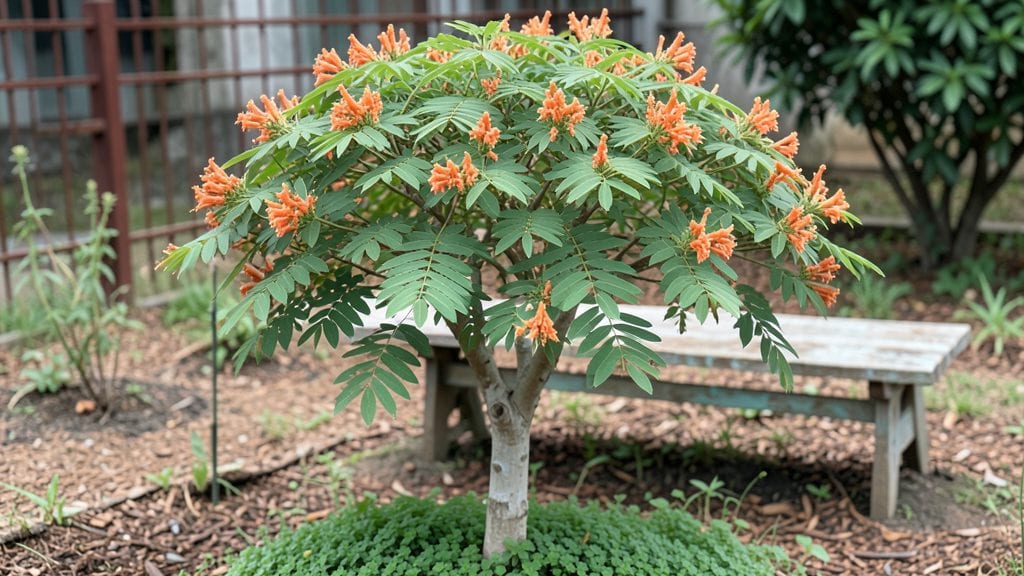
Transforming your Singapore home into a lush, private retreat starts with the right tree garden design. 🌿 The key lies in layering fast-growing, shade-tolerant species like Ceriops tagal (mangrove) or Delonix regia (flamboyant) to create instant privacy while thriving in our humid, compact spaces.
These trees aren't just decorative—they're climate warriors that reduce urban heat and filter air pollution while you relax beneath their canopy.
Most people assume Singapore's small yards can't support big trees, but the trick is choosing the right species for your space. A well-placed Albizia chinensis (silk tree) can grow 30 feet tall in 10 years while fitting neatly into a 10x10-foot courtyard.
Combine it with ground covers like Peperomia prostrata to create a multi-level jungle effect that feels wild yet controlled. The best designs use vertical space too—trellises with climbing Ipomoea vines add another layer of greenery without stealing square footage.
You'll end up with a garden that feels like a private escape, complete with dappled shade perfect for afternoon siestas. The air stays cooler, humidity is balanced by proper drainage, and you create habitats for local birds like the Asian glossy starling.
My own backyard transformed from a concrete slab to a thriving ecosystem after just 18 months with this approach—neighbors even asked how I did it. The secret? Matching plants to Singapore's microclimates and letting nature do the heavy lifting.
This works equally well for HDB flats with tiny balconies or landed properties with sprawling grounds. Start with one statement tree and build outward—your urban jungle will reward you with privacy, beauty, and a cooler home year-round. Let's bring the forest to your doorstep, Singapore-style.
📚 In This Guide
- What you need
- Instructions
- Tips and common mistakes
- Wrapping up and next steps
What you need
- ● Native or Adapted Plants: 2-4 Ficus benjamina (Weeping Fig) – 6-8 ft tall
- ● 1-2 Albizia falcataria (Rain Tree) – 20-30 ft tall (for canopy)
- ● 3-5 Musa basjoo (Hardy Banana) – 10-12 ft tall (for texture)
- ● Ground cover: Lippia nodiflora (Creeping Frogfruit) or Pilea peperomioides (Chinese Money Plant)
- ● Soil & Amendments: 50 lbs Organic compost (for nutrient-rich soil)
- ● 20 lbs Perlite or coconut coir (for drainage)
- ● 1 bag Slow-release fertilizer (15-15-15 NPK ratio)
- ● Hardware & Structures: 1-2 Bamboo trellises (6-8 ft tall, for climbing plants)
- ● 4-6 Galvanized metal stakes (for plant support)
- ● 1 Drip irrigation kit (with 10-15 ft tubing)
- ● Tools: 1 Garden trowel (for planting)
- ● 1 Pruning shears (for shaping)
- ● 1 Wheelbarrow (for soil transport)
- ● 1 Measuring tape (for spacing)
- ● Mulch (3-4 bags of wood chips for moisture retention)
- ● Decorative stones (for pathways or borders)
- ● Solar-powered garden lights (for ambiance)
- ● Birdhouses or bat boxes (to attract pollinators)
- ● Weather-resistant paint (for trellis customization)
Step-by-Step instructions for creating a Singapore Tree Garden
Transform your small yard into a lush, private retreat using this layered approach inspired by Singapore's iconic urban forests.
🌱 Step 1: Plan Your Vertical Layers for Maximum Privacy
Start by sketching your space, dividing it into three vertical zones: canopy (12-20 feet), mid-story (6-12 feet), and understory (3-6 feet). Tall trees like Empress Tree (Paulownia tomentosa) or Golden Rain Tree (Koelreuteria paniculata) form your upper canopy, blocking wind and prying eyes. I always place these along property lines to create an instant privacy barrier.
For mid-story, mix fast-growing shrubs like Forsythia (Forsythia × intermedia) or Abelia (Abelia × grandiflora) to fill gaps while providing seasonal color. These should be spaced 8-10 feet apart to allow mature growth without crowding. Understory plants like Dwarf Fountain Grass (Pennisetum alopecuroides 'Hameln') or Creeping Phlox (Phlox subulata) soften the base and prevent weeds.
🪴 Step 2: Select Containers and Prepare Planting Sites
For small yards, container planting gives you flexibility. Use 15-gallon fabric grow bags for canopy trees and 5-gallon pots for mid-story shrubs—these allow roots to breathe while containing growth. If planting in-ground, amend the soil with 3 inches of compost mixed into the top 12 inches of native soil to improve drainage and fertility.
Dig holes twice as wide as the root ball but only as deep. This encourages roots to spread horizontally rather than settling too low. For container plants, remove the nursery pot and gently loosen roots before placing them in the hole or container. Water deeply immediately after planting to eliminate air pockets.
☀️ Step 3: Layer Mulch and Water Thoroughly
Spread 3 inches of wood chips or shredded bark mulch over the root zones, keeping it 6 inches away from stems to prevent rot. Mulch retains moisture, regulates soil temperature, and suppresses weeds—critical in urban settings where soil quality is often poor. I use pine bark fines for smaller plants and cypress mulch for larger trees because it breaks down slowly.
Water each plant until moisture reaches 12 inches deep. You’ll know it’s enough when water drains from the bottom of containers or when the soil feels damp at that depth. Overwatering here is worse than underwatering—roots need oxygen too. After the initial soak, water 2-3 times weekly during the first growing season, adjusting for rainfall.
✂️ Step 4: Prune for Structure and Health
Shape young trees and shrubs by removing dead, crossing, or inward-growing branches first. For canopy trees, aim to create an open-center form to allow light to filter through. Mid-story shrubs benefit from light heading cuts to encourage bushier growth—never trim more than one-third of the plant in a single session.
Use sterilized pruners and make cuts just above a bud or lateral branch to promote healing. I always prune in late winter or early spring before new growth begins. Avoid heavy pruning in summer, as it stresses plants and invites pests. After pruning, apply a balanced 10-10-10 fertilizer to support recovery.
🌿 Step 5: Maintain Through the Seasons
In spring, fertilize again with a slow-release granular fertilizer to fuel new growth. Monitor for pests like spider mites or scale, treating with neem oil if needed. Summer requires weekly deep watering—check soil moisture at 4 inches deep before watering. In fall, reduce watering and apply a 2-inch layer of mulch to protect roots from winter temperature swings.
Winter is the time to assess your design. Remove any dead or diseased branches and prune lightly to maintain shape. If you notice leggy growth, it’s a sign your plants need more light or a fertilizer boost in the next growing season. A well-layered Singapore Tree Garden thrives on this seasonal rhythm—adjust as needed, but never drastically.
Tips & tricks for perfect Singapore Tree Garden design
Creating a thriving Singapore Tree Garden isn't just about planting—it's about layering life itself. Here are the secrets that'll transform your small yard into a lush, private oasis.
Layering for Light and Privacy: The 12-20 foot canopy layer isn't just about height—it's about creating a natural light filter. I learned this the hard way after planting dense canopy trees too close together, which blocked all sunlight from reaching my understory plants. Space your Empress Trees or Golden Rain Trees at least 15 feet apart to allow filtered light through while still maintaining that crucial privacy barrier. Think of it like a living canopy that whispers sunlight to the plants below.
Root Zone Mastery: When preparing planting sites in Step 2, focus on the root zone's horizontal spread rather than depth. Digging holes twice as wide as the root ball creates the perfect environment for roots to establish outward, which is especially critical in urban soils that often compact easily. For container plants, I swear by gently loosening those roots before planting—it makes all the difference in how quickly they adapt to their new home. This technique prevents that "shocked" look many plants get when transplanted.
Mulch Selection Strategy: That 3-inch layer of mulch in Step 3 isn't just decorative—it's your plant's thermal blanket. I've found pine bark fines work wonders for smaller plants because they break down slowly, while cypress mulch is my go-to for larger trees since it resists decomposition longer. Pro tip: Keep that mulch 6 inches away from stems to prevent rot, but don't skimp on coverage—urban soils lose moisture faster than you'd think. This simple layering technique can cut your watering needs by nearly 30%.
Seasonal Pruning Calendar: The late winter/early spring timing in Step 4 is non-negotiable for Singapore Tree Gardens. Pruning at this exact window gives your plants the full growing season to recover before winter stress sets in. I always mark my calendar for February 15th—this gives me a buffer to adjust based on local frost dates. And remember, that one-third rule isn't arbitrary: it's based on plant physiology. Cutting more than that triggers shock responses that can take years to recover from.
Pro Tips for Singapore Tree Garden
- Creating a thriving Singapore Tree Garden isn't just about planting—it's about layering life itself.
- Layering for Light and Privacy: The 12-20 foot canopy layer isn't just about height—it's about creating a natural light filter.
- Root Zone Mastery: When preparing planting sites in Step 2, focus on the root zone's horizontal spread rather than depth.
Frequently asked questions
Got questions about transforming your small yard into a lush, private Singapore Tree Garden?
Here are answers to the most common ones—so you can dive in with confidence!
What are the best low-maintenance trees for Singapore Tree Garden privacy?
Opt for fast-growing, compact trees like Albizia falcataria (rain tree), Melia azedarach (chinaberry), or Ficus microcarpa (Ginseng fig). These thrive in Singapore’s climate, require minimal pruning, and provide year-round greenery. Pair them with native shrubs like Melastoma malabathricum (sendudok) for layered privacy.
How long does it take to see significant privacy from a Singapore Tree Garden?
With the right mix of trees and shrubs, you’ll notice a difference in 3–5 years. Fast-growing species like Leucaena leucocephala (ipil-ipil) can create a dense canopy in 2–3 years, while slower growers like Syzygium malaccense (Malay apple) take longer but offer long-term structure. Plan for staggered planting to speed up results!
Is a Singapore Tree Garden more expensive than traditional fencing?
Upfront costs may be higher—budget $1,500–$5,000 for materials and planting (depending on yard size)—but long-term savings come from no fencing maintenance, energy efficiency (shade reduces cooling costs), and increased property value. Start small with a perimeter hedge to test the concept before full-scale planting.
How do I protect my Singapore Tree Garden from Singapore’s heavy rain and humidity?
Improve drainage with swales (shallow trenches) or raised beds to prevent root rot. Use well-draining soil mixes (50% topsoil, 30% compost, 20% coarse sand) and mulch heavily to retain moisture without waterlogging. Choose fungus-resistant species like Peltophorum pterocarpum (yellow flame tree) to minimize humidity-related issues.
Can I mix tropical plants with Singapore Tree Garden designs for extra vibrancy?
Add colorful ground covers like Portulaca grandiflora (Moss rose) or Clitoria ternatea (Butterfly pea) for bursts of hue. Just ensure they’re non-invasive and complement your trees’ light needs. Avoid overcrowding—aim for 20–30% ground cover to keep your garden’s structure intact.
Wrapping up and next steps
Transforming your small yard into a lush, private Singapore Tree Garden is all about creativity and smart layering! 🌿 With the right mix of native plants, vertical elements, and strategic design, you can create a serene urban oasis that feels like a tropical escape—even in tight spaces.
The key is starting small, experimenting with textures, and letting nature do the work for you.
Ready to take the next step? Sketch your space, gather a few plants, and begin layering—one plant at a time! Your future self (and your neighbors) will thank you. 🌱✨