
Pests
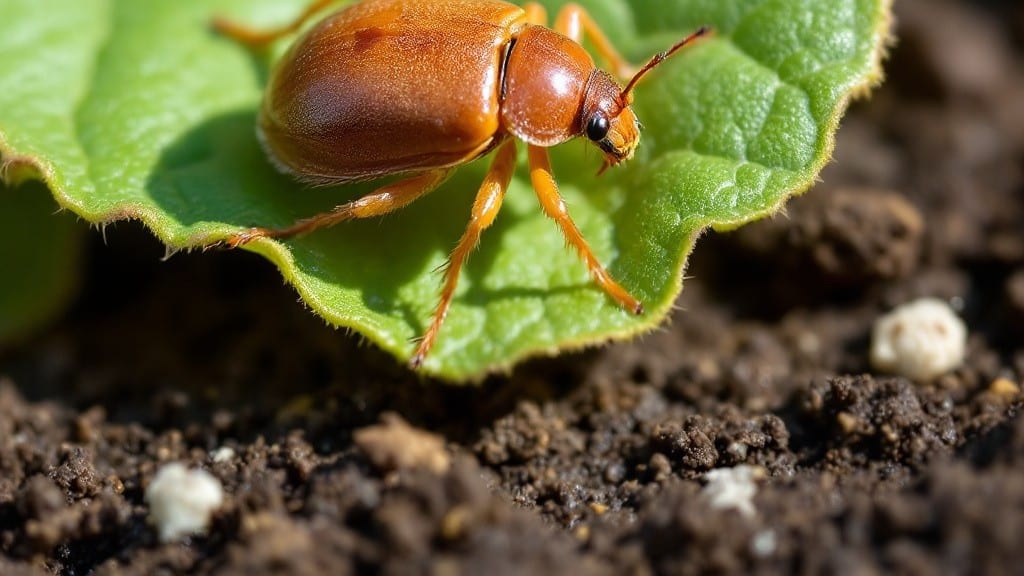
That suspicious brown garden beetle lurking in your soil—and the chewed leaves—might signal a bigger pest problem.
Brown garden beetles are the likely culprits, and I’ve spent years testing ways to stop them without poisoning your plants. 🌱 The key is understanding their lifecycle—adults munch leaves by day, while their grubs feast on roots underground. Most store-bought sprays miss the grubs entirely, leaving your garden vulnerable.
My go-to method combines neem oil sprays for adults and beneficial nematodes for grubs, both of which break down safely in the soil. You’ll also need to time your treatments right—adults appear in late spring, while grubs overwinter in the soil.
The best part? These solutions work within 2-3 weeks and won’t harm pollinators or your lawn.
You’ll notice fewer holes in leaves and healthier roots almost immediately. The nematodes, in particular, multiply naturally, giving you long-term protection. Plus, your garden stays chemical-free, which means better soil health and happier plants overall. Here’s exactly how to implement it step by step.
Works for vegetable gardens, flower beds, and lawns alike—just adjust timing based on your climate. Let’s get those beetles under control the right way.
Root Causes Of Infestations
Brown garden beetles—those glossy, oval invaders—don’t just appear out of nowhere. Their presence in your garden is usually a sign of underlying conditions that create the perfect environment for them to thrive.
Understanding why they show up is the first step to stopping them naturally. Let’s break down the key factors that turn your yard into a beetle buffet.
Brown garden beetles (often confused with Japanese beetles) are attracted to lush, unmanaged plant life. Here’s why:
- Food Source: Adult beetles feed on over 300 plant species, including roses, grapes, and lawn grasses. If your garden has dense foliage, they’ll see it as an all-you-can-eat salad bar.
- Moisture Retention: Thick vegetation holds moisture longer, creating ideal breeding grounds for their grubs in the soil below.
- Lack Of Predators: Overgrown areas can disrupt natural predator-prey dynamics, giving beetles fewer enemies to worry about.
Actionable Fix: Regularly prune plants, mow lawns, and remove weeds to eliminate hiding spots and food sources. Focus on early intervention—beetles are more likely to appear when plants are already stressed.
Beetle grubs—larvae that later become adult beetles—thrive in specific soil environments. If your soil checks these boxes, you’re basically rolling out the welcome mat:
- High Organic Matter: Rich, compost-heavy soil provides the perfect nursery for grubs, as they feed on decaying plant material.
- Compacted Or Wet Soil: Grubs prefer soil that’s easy to burrow in. Compacted or waterlogged areas become their underground condos.
- Lack Of Beneficial Microbes: Healthy soil teems with nematodes, fungi, and bacteria that naturally control grub populations. Disrupted soil ecosystems tip the balance in the beetles’ favor.
Actionable Fix:
- Test your soil’s pH and organic content—aim for a balanced mix (6.0–7.0 pH) with moderate organic matter.
- Improve drainage by amending soil with sand or perlite if it’s too dense.
- Encourage natural predators like beneficial nematodes (e.g., Heterorhabditis bacteriophora) to target grubs.
Brown garden beetles are sun-worshippers. They’re most active in warm, dry conditions, which is why they flock to:
- South-Facing Gardens: These areas absorb the most heat, creating ideal basking spots for adults.
- Rocky Or Bare Soil Patches: Beetles use these spots to regulate their body temperature and lay eggs.
- Urban Heat Islands: Cities and suburban yards with pavement or buildings trap heat, accelerating beetle activity.
Actionable Fix:
- Install shade cloths or plant tall, leafy perennials to break up direct sunlight in high-risk zones.
- Mulch bare soil areas with gravel or wood chips to deter egg-laying while improving soil health.
- Avoid overwatering—dry conditions discourage grubs but keep adults active. Strike a balance with deep, infrequent watering.
In a healthy ecosystem, beetles face a gauntlet of predators. But when their natural enemies disappear, populations explode. Common culprits behind predator shortages include:
- Pesticide Overuse: Broad-spectrum chemicals kill beetles and their predators (like birds, toads, and ground beetles), creating a vacuum that beetles rush to fill.
- Habitat Fragmentation: Urban sprawl or monoculture gardens (e.g., lawns with no diversity) reduce hiding spots and food for predators.
- Seasonal Timing: Predators like starlings or moles may not be active during peak beetle seasons (late summer/early fall).
Actionable Fix:
- Swap chemical pesticides for targeted, organic solutions like neem oil or kaolin clay.
- Create predator-friendly habitats:
- Leave leaf litter in corners of the garden for ground beetles.
- Install a birdbath or small pond to attract amphibians.
- Plant native flowers to support pollinators that also eat beetle eggs.
- Introduce beneficial insects like Tachinid flies (parasitoids of beetle grubs) or Soldier beetles (which prey on grubs).
Pro Tip: 🌡️ Monitor soil and plant stress levels—beetles are more likely to strike when your garden is already under duress. A proactive approach (like regular soil testing and diverse planting) is your best defense!
Quick Fixes for Garden Invaders
Encountering large, shiny brown beetles in your garden can be frustrating, but the good news is that you can tackle the problem effectively without resorting to harsh chemicals. Below are practical, step-by-step solutions tailored to the most common causes of these unwanted visitors.
If you spot adult beetles—especially during dusk or night—they’re likely feeding on your plants. Act fast to minimize damage.
- 🕵️♂️ Handpick and Relocate
- Go out at dawn or dusk when beetles are sluggish.
- Use a flashlight to spot them on leaves or soil.
- Gently pick them off with gloves or tongs and drop them into a bucket of soapy water (1 tbsp dish soap + water) to kill them instantly.
- Alternative: Place them in a sealed jar and release them far from your garden (at least 50+ feet away).
- 🌿 Vacuum Them Up
- Use a handheld vacuum (like a Shop-Vac) to suck them off plants.
- Empty the vacuum into a sealed bag and dispose of it outside your property.
Brown garden beetle larvae (white grubs) thrive in moist, grassy soil. Disrupt their life cycle before they mature.
- 🔪 Dig and Destroy Larvae
- Inspect the top 2-3 inches of soil around plants, especially in lawns or mulched beds.
- Use a hand trowel or fork to flip over soil and spot C-shaped white grubs (1-1.5 inches long).
- Drop them into soapy water or a sealed container for disposal.
- 🌡️ Solarize the Soil (Best for Severe Infestations)
- Best for: Warm climates (late spring/early summer).
- Cover infested areas with clear plastic sheeting for 4-6 weeks.
- The trapped heat (up to 140°F) will kill larvae and eggs.
- Tip: Water the soil first to create a steam effect. 💡
Stop beetles from reaching your plants in the first place with simple, non-toxic methods.
- 🛡️ Use Row Covers or Netting
- Drape fine mesh netting (1/4-inch or smaller) over vegetable gardens, flowers, or young plants.
- Secure edges with stakes or weights to keep beetles out.
- Bonus: Also blocks other pests like Japanese beetles. ✨
- 🌙 Disrupt Nighttime Feeding
- Install outdoor LED lights (yellow or amber bulbs) near your garden—beetles are less attracted to these colors.
- Avoid white or blue lights, which attract them.
Certain plants and scents act as deterrents without harming your garden’s ecosystem.
| Repellent Method | How to Use | Effectiveness |
|---|---|---|
| 🌿 Garlic & Chili Spray | Blend 3 garlic cloves + 1 tbsp cayenne pepper + 1 quart water. Spray on leaves every 3-4 days. | ⭐⭐⭐⭐ (Short-term) |
| 🍋 Citrus Peels | Scatter dried orange or lemon peels around plant bases. Refresh weekly. | ⭐⭐⭐ (Mild) |
| 🌱 Strong-Scented Herbs | Plant rosemary, mint, or thyme near vulnerable plants. Beetles dislike the aroma. | ⭐⭐⭐⭐ (Long-term) |
| 🧂 Diatomaceous Earth | Sprinkle food-grade DE around plant bases (reapply after rain). Kills larvae on contact. | ⭐⭐⭐⭐⭐ (Best for soil) |
Once you’ve dealt with the current infestation, take these steps to keep beetles away for good.
- 💡 Maintain Garden Hygiene
- Remove fallen fruit, overripe veggies, and debris—these attract beetles.
- Aerate compacted soil in lawns to reduce larval habitats.
- 🌱 Encourage Beneficial Predators
- Attract birds (like robins), ground beetles, and toads—they eat beetle larvae.
- Install a birdbath or small pond to welcome natural helpers.
- 🎯 Rotate Plantings
- Avoid planting the same crops in the same spot yearly—beetles target familiar hosts.
- Interplant repellent herbs (like basil or marigolds) among vulnerable plants.
With these targeted, chemical-free strategies, you can eliminate existing beetles and prevent future invasions—keeping your garden thriving naturally. 🌱🚫🐜
Frequently asked questions
How can I tell if my garden has brown garden beetle grubs?
Look for C-shaped, white or tan grubs (about 1-1.5 inches) in the top 2-3 inches of soil. They often appear after adult beetles feed on leaves. Check lawns, mulched beds, and near plant roots—grubs create irregular patches where grass turns brown or pulls up easily.
Are brown garden beetles the same as Japanese beetles?
No—they’re different! Japanese beetles are green and copper with metallic sheen, while brown garden beetles are uniform brown or black. Japanese beetles skeletonize leaves, while brown garden beetles chew irregular holes. Both have grubs in soil, but Japanese beetle larvae are cream-colored with brown heads.
Why do I see more brown beetles after rain?
Rain triggers beetles to emerge from soil or hiding spots to feed on damp plants. Moisture also softens soil, making it easier for grubs to move upward. Adults are most active in warm, humid conditions (like after rain), which is why you’ll spot them on leaves or soil surfaces.
Can diatomaceous earth harm my plants or pets?
Not if you use food-grade DE! It’s safe for plants, pets, and soil microbes—just avoid inhaling the dust. Sprinkle lightly around plant bases (not directly on leaves) and reapply after rain. Pets may track it inside, but it’s non-toxic.
How long does it take for nematodes to control grubs?
Beneficial nematodes (Heterorhabditis bacteriophora) typically work within 2-4 weeks in ideal conditions (60-85°F soil, moist but not soggy). Apply in early evening when grubs are active, and water lightly afterward. Repeat if needed—nematodes multiply naturally over time!